Sidebar

Recap

It's Not Awkward: Starting the Consent Conversation

By: Sonali Biswas

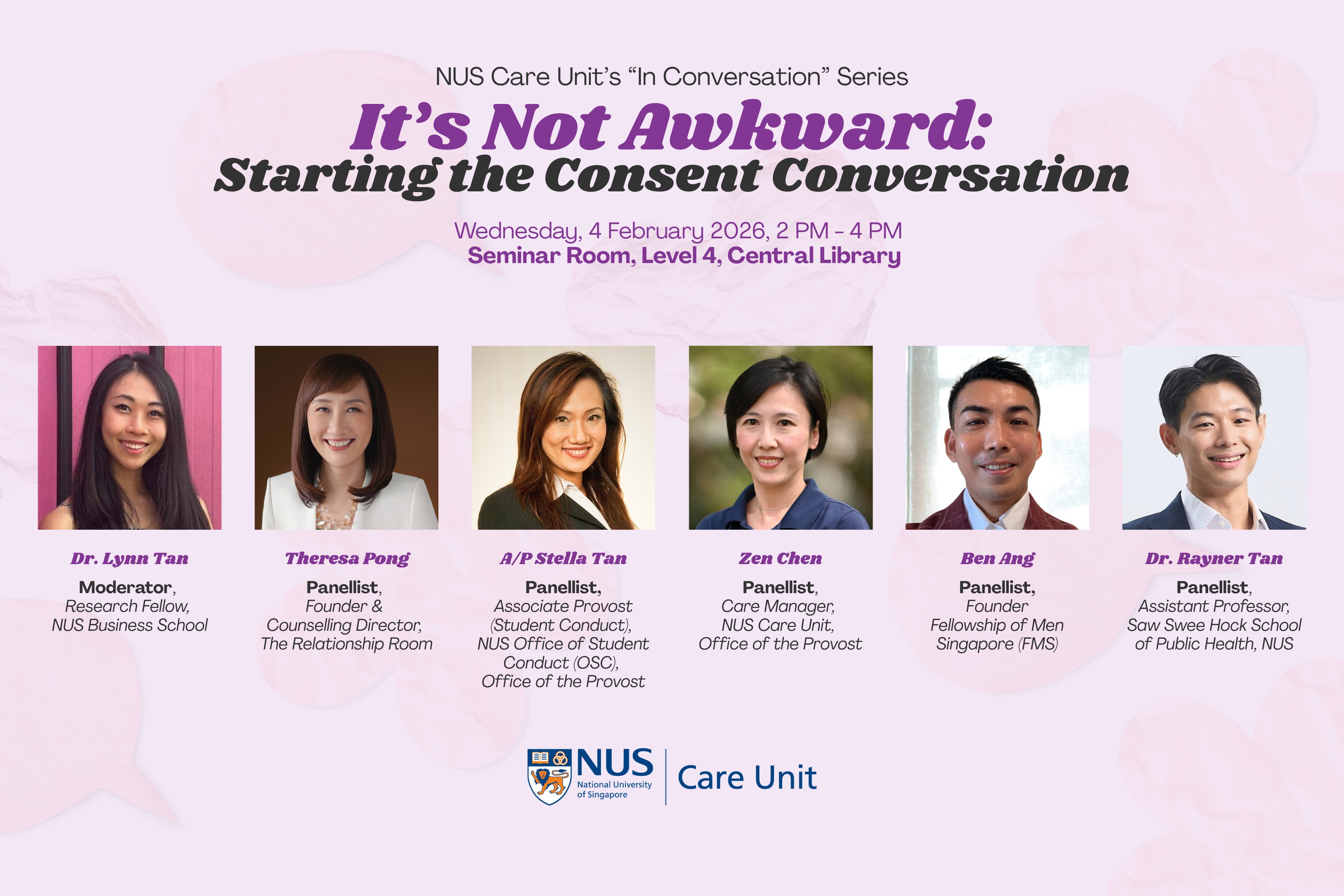
In the sixth episode of NCU’s “In Conversation…” series on 4 April 2026, we invited panelists both from various organizations and disciplines to discuss the different ways we can approach and navigate conversations on consent with our peers and loved ones.

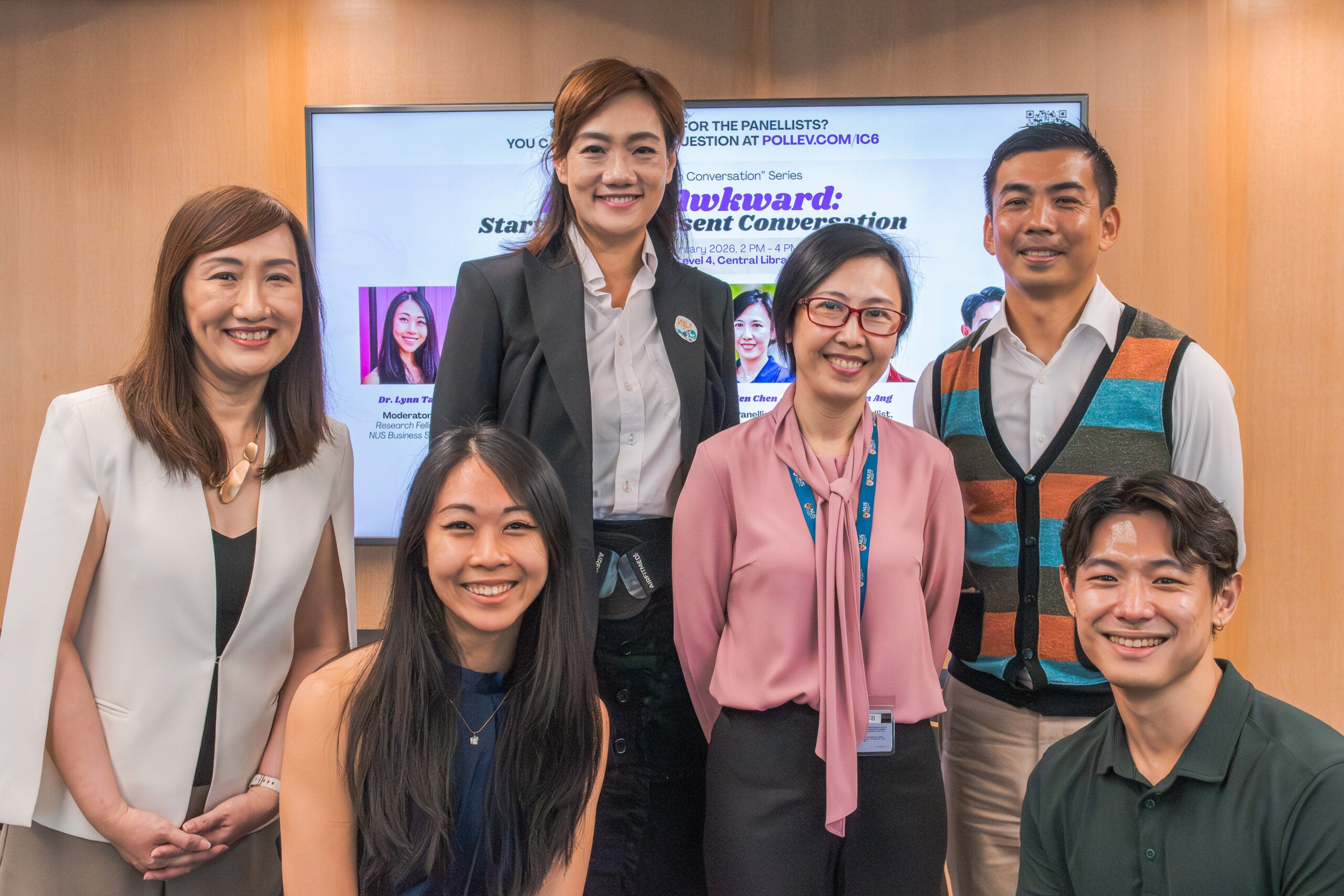
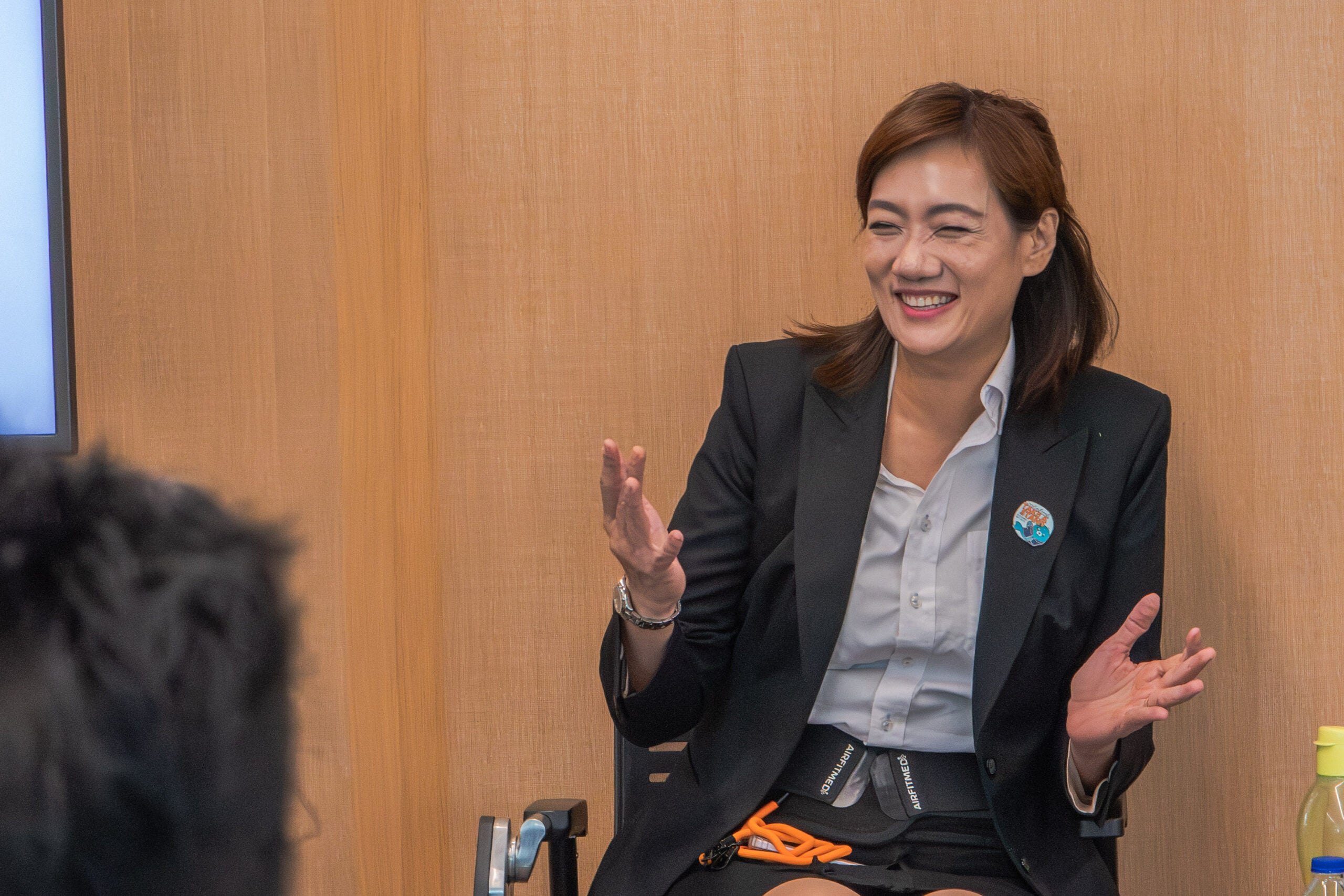
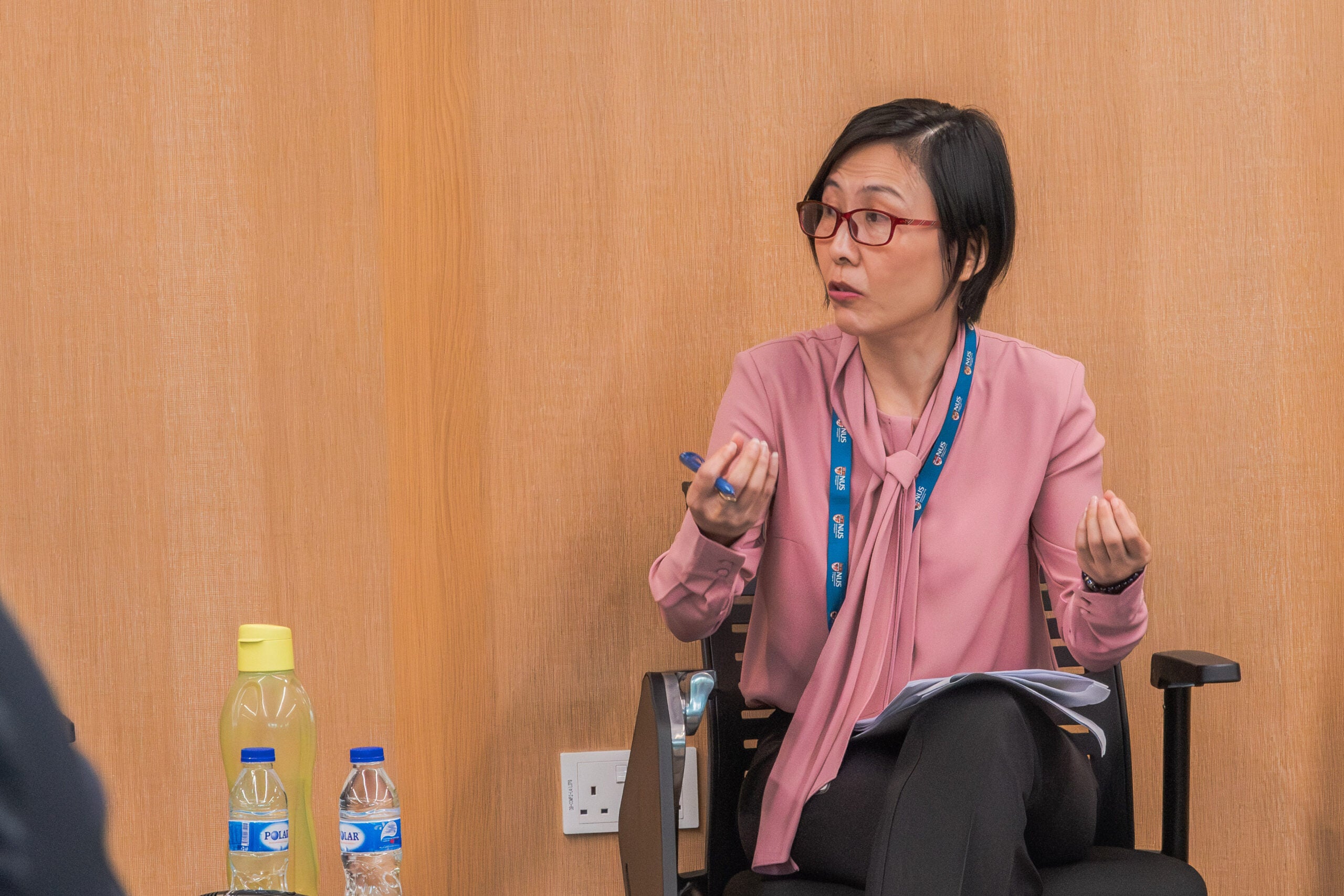
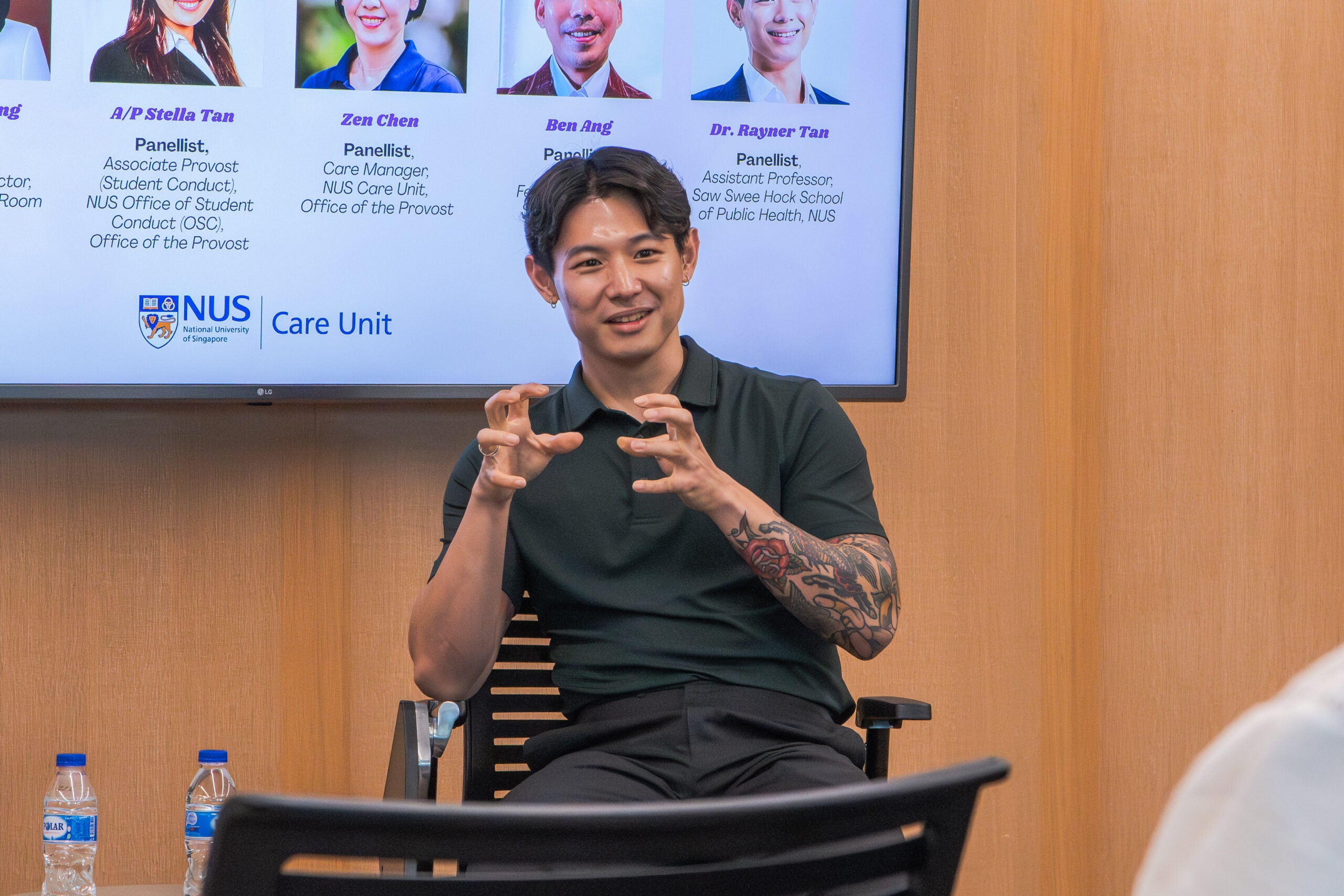
The session was moderated by Dr. Lynn Tan (Research Fellow, NUS Business School), and invited panelists included Ms. Theresa Pong (Founder & Counselling Director at The Relationship Room), Prof Stella Tan (Associate Provost of Student Conduct at NUS Office of Student Conduct), Ms Zen Chen (Care Manager at NUS Care Unit), Mr. Ben Ang (Founder of Fellowship of Men Singapore), and Dr. Rayner Tan (Assistant Professor at Saw Swee Hock School of Public Health, NUS).

From left to right: Ms. Theresa Pong, Dr. Lynn Tan, Prof Stella Tan, Ms. Zen Chen, Mr. Ben Ang, & Dr. Rayner Tan.

Defining Consent

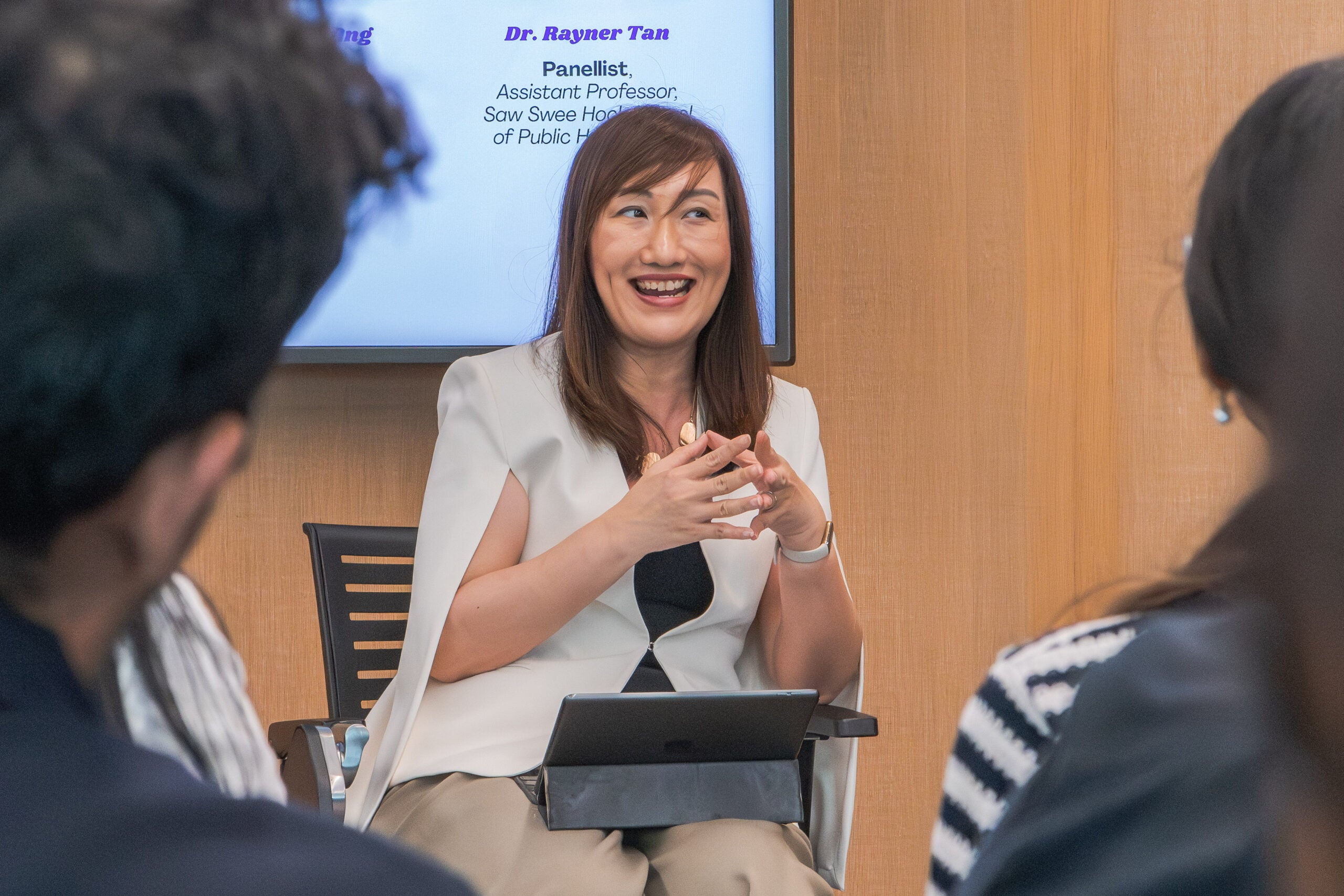
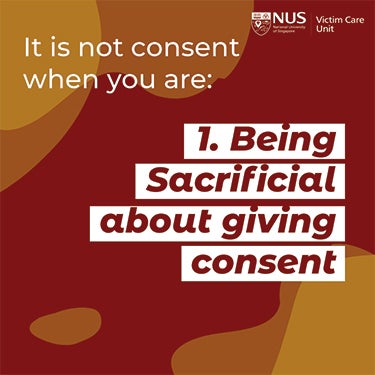
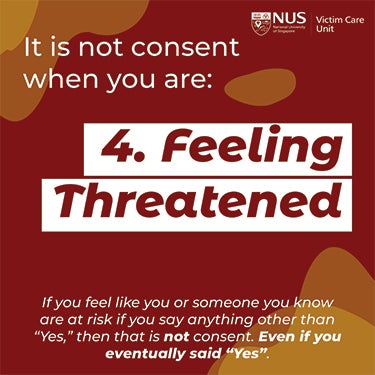
The session began with a conversation unpacking the definition of consent. Ms. Theresa Pong set the tone by emphasising that consent goes beyond a simple ‘yes’ – it requires emotional safety and mutual willingness. Prof Stella Tan added that consent differs across contexts, where cultural norms, the nature of a relationship, situational factors such as intoxication, and even the body language and communication of each party can affect how consent is given and interpreted. Mr. Ben Ang stressed the importance of men taking shared responsibility in the consent conversation, while Ms. Zen Chen and Dr. Rayner Tan each drew attention media representations of consent and relationship power dynamics respectively as lenses through which to understand consent.

“It Is important to move beyond the concept of no means no, and this is done so that we can actually feel safe and connected.”

Ms. Theresa Pong

Navigating Consent in Practice

Dr. Lynn Tan then engaged the panelists in a discussion on how to navigate consent in practice. Ms. Theresa Pong spoke about the necessity of building emotional safety in relationships to be able have these conversations openly. On a similar note, Mr. Ben Ang discussed the role of men checking in with their partners to foster continued trust. Prof Stella Tan then raised a thought-provoking example to highlight that consent is sometimes implied within relationships, a reality which can make it hard to navigate the conversation. Dr. Rayner Tan built on this by advocating for normalising explicit conversations around consent, to better ensure all parties provide informed and willing consent.

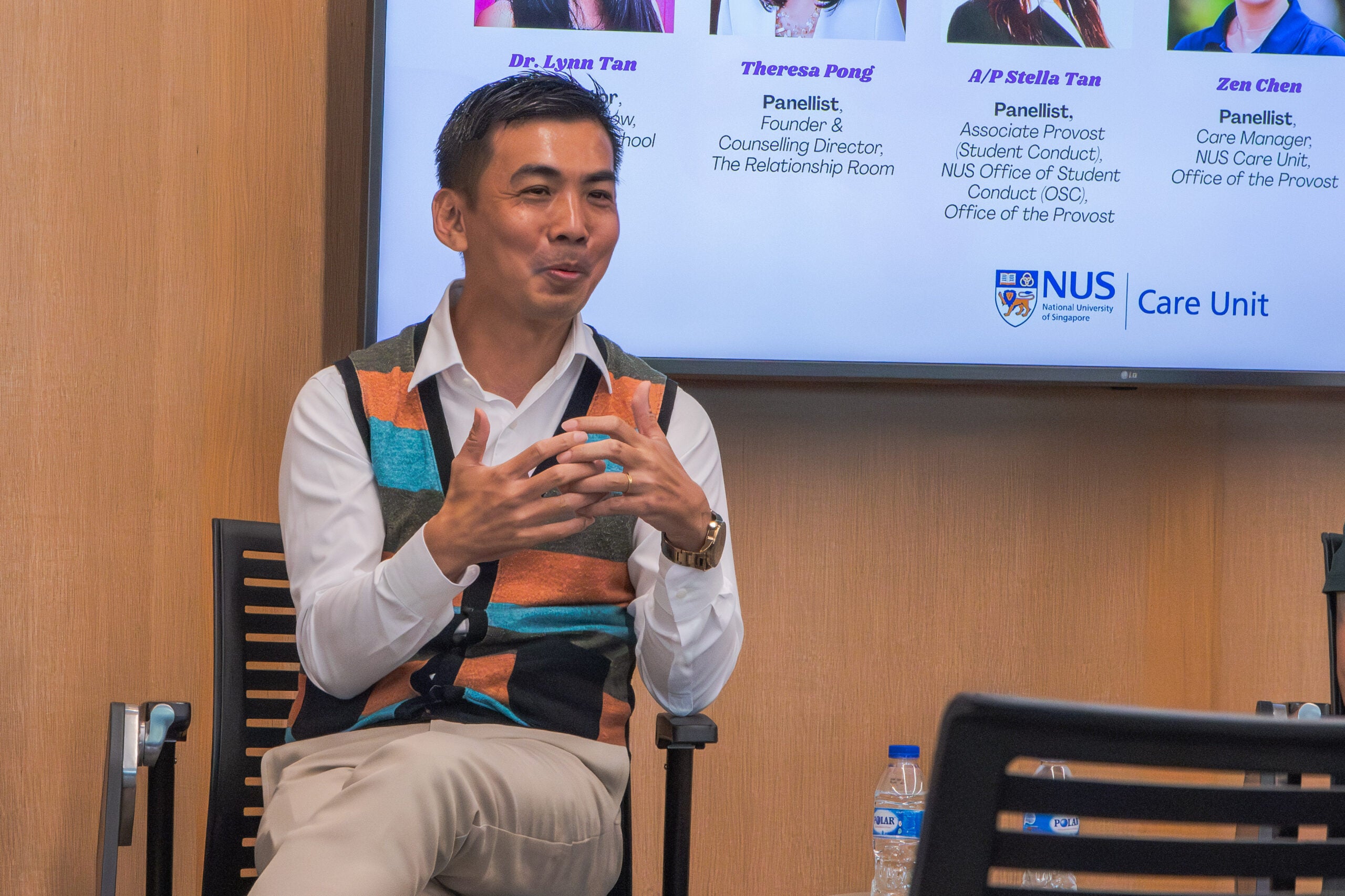
When asked about when and how to bring up the consent conversation. Mr. Ben Ang drew on insights from his experience working with offenders, suggesting to reframe views of consent: rather than seeing it as something that would “kill the mood”, he encouraged viewing it as a foundation for trust. Dr. Rayner Tan further highlighted that the in the context of intoxication or drug use, consent can become more complicated, making it even more important to have these conversations ahead of time.

“I mean, a lot of inmates that I work with keep saying stuff like, Why talk about consent? Consent will kill the mood…. I have seen and convinced [myself] enough that if you don’t talk about that, you will start to damage trust and [the] relationship.”

Mr. Ben Ang

Supporting Survivors

Prof Stella Tan mentioned the importance of friends showing up for friends and community members following experiences of sexual misconduct, leading to a discussion on how best to support survivors and those who experience misconduct. Dr. Rayner Tan emphasized the importance of holding space and practising, while Ms.  Zen Chen shared her approach as a Care Manager, to provide a listening ear for survivors without passing judgement or probing for details. Mr. Ben Ang extended this approach to interactions with those who admit to causing harm in relationships. Prof Stella Tan summarised it well, advising the audience to first and foremost provide support when confronted with a situation like this.

If someone comes up to you to ask you a question [about a negative sexual encounter], rather then saying “let’s call the police, let’s call campus security”, I think the first port of call could be that the person needs help, the person wants to talk about it.”

A/P Stella Tan

Rebuilding Consent and Setting Boundaries

Following on from these suggestions, Dr. Lynn Tan asked the panelists for their advice on rebuilding consent in relationships where it has been violated, or in cases where a partner reacts negatively to the topic of consent. Ms. Pong recommended seeking professional help for both parties to reach the point of embracing each other’s vulnerabilities. Dr. Rayner Tan and Mr. Ben Ang both advocated for the importance of self-reflection and drawing firm personal boundaries, accepting that we cannot control others’ reactions. Ms. Zen Chen further highlighted the value of teaching the youth about how to build healthy relationships from the outset.

“It is important to teach our young people how to build healthy relationships, how to recognize health relationships… and to recognize the right people that you want to be around you.”

Ms. Zen Chen

Q&A and Looking Ahead

During the Q&A, audience members touched on topics such as navigating intimacy in non-traditional relationship forms present in the modern dating landscapes, and how to navigate consent in a culture where consent is a “taboo” topic. Panelists returned to and reinforced a few key themes: setting boundaries, proactively bringing up the conversation early, and empowering individuals to have the courage to say “no” when feeling uncomfortable. Dr. Rayner Tan further reminded attendees not to let societal expectations define intimacy, and to instead construct your own ‘script’ for intimacy with you partner.

When you think about… ‘I need to do this, and rush into the next stage, otherwise it’s not really a relationship.’ The question then is, who told you that? You know there’s a relationship between both of you, so you should be able to construct that script for yourself.” – Dr. Rayner Tan

The session closed with panelists providing reflections on what NUS and the wider Singaporean community can do better. They highlighted three key takeaways: to educate (and learn from) the younger generation to take accountability, to look out for and support others in the community when cases of misconduct occur, and to create a safe space to continue this conversation.

If you or someone you know is affected by sexual misconduct, please reach out to NCU for support by calling our sexual misconduct helpline (+65 6601 4000) or emailing us at ncu_help@nus.edu.sg.

Recap: Flipping the Script - Let's Talk About Sexual Health (25 Mar 2022)

By: Ananya Mathur

The fourth episode of NCU’s “In Conversation…” series was held on 25 Mar 2022. Panelists from NUS, Yale-NUS, as well as AWARE were invited to shed light on how we can approach and navigate conversations regarding sexual health.

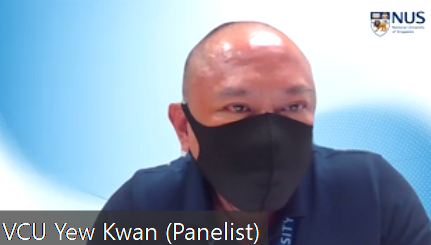
The discussion was moderated by Dr. Tong Yew Kwan (Deputy Head at NUS Care Unit), and joined by Ms. Tan Joo Hymn (Project Director for “Birds & Bees” at AWARE), Dr. Basil Wu (Senior Health Physician at the University Health Centre), Ms. Fiona Freeman-Grundei and Ms. Olivia Dure (Survivor Support Advisors at Yale-NUS), as well as Ms. Natalie Wong (Care Manager at NUS Care Unit).

Panel Discussion

The seminar kicked off with a poll about their earliest exposure to sexual health, in which most participants said primary school (45%), followed by secondary school (25%), and friends (17%). Only about 4% had been introduced to topics about sex and sexual health by their parents.

Ms. Tan added that unsurprisingly, according to AWARE’s own surveys, there is a still major barrier between young people and parents to have conversations with each other about sexual health. She commented that such topics are vital to a child’s sexual well-being and should be introduced at an early age.

Education about sex and sexual health can educate children from young about the value of respect and consent, equipping them with the knowledge and language to speak up and guard against sexual misbehaviours.

On that note, Dr. Tong inquired what a healthy relationship with a partner looks like. Ms. Wong responded by positing that a healthy relationship consists of mutual respect, healthy boundaries, plenty of communication, and a balanced amount of time spent together and apart. Ms. Wong also touched on some red flags in relationships that could lead to abuse, such as emotional manipulation.

Dr. Wu then weighed in with a medical take on sexual health, debunking certain myths about Sexually Transmitted Infections (STIs) in his conversation about safe sex. Ms. Dure also surfaced the common misconception that marital sex is always safe and that casual sex is always unsafe.

Emotional strain, mental health issues, unwanted pregnancies and STIs can also occur within marital sex, such as when one partner is unfaithful to their partner. On the other hand, casual sex can be practised safely by taking the necessary precautions. Ms. Tan supported Ms. Dure’s comments, pointing out that in 2005 and 2006, the largest rate of HIV/AIDS infection was among married women, hence the assumption that marital sex is always safe is dangerous.

Ms. Freeman-Grundei shared about some programmes they have conducted to raise awareness of sexual health, including educating students on navigating oft-ignored topics in sexual health such as healthy expressions of masculinity and sexual identity.

Ms. Dure added that they found success in conducting a mandatory module on respect and consent, since it was run in small groups where students can share and learn from one another’s experiences.

In closing, the panellists reiterated the importance of respect and consent in relationships, as well as being non-judgemental in conversations about sexual health.

If you or someone you know is affected by sexual misconduct, please reach out to NCU for support by calling our sexual misconduct helpline (+65 6601 4000) or emailing us at ncu_help@nus.edu.sg.

You can also read our FAQs on seeking medical attentiion here.

Recap: Love & Technology - What's the New Normal? (24 Sep 2021)

By: Vanessa Ow Yan Lin

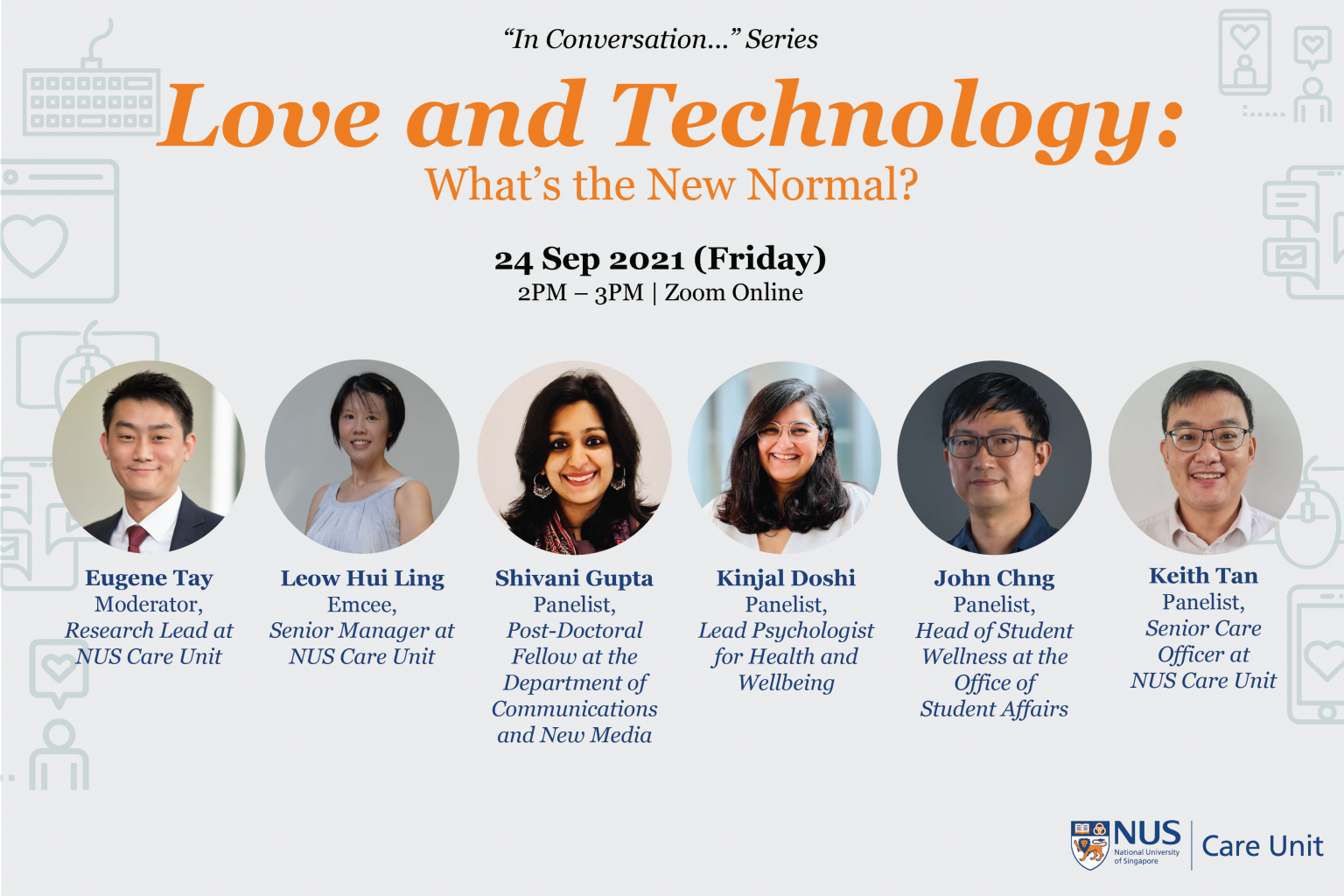
In this third episode of NCU’s “In Conversation…” series held on 24 Sep 2021, we invited panelists across various NUS departments to discuss the increasing reliance on technology to facilitate social interactions and the impact this has on social relationships.

The discussion was moderated by Dr. Eugene Tay (Research Lead, NUS Care Unit) and was joined by Dr. Shivani Gupta (Post-Doctoral Fellow, Department of Communications and New Media), Dr. Kinjal Doshi (Lead Psychologist, NUS Health and Wellbeing), Mr. John Chng (Head of Student Wellness, Office of Student Affairs) and Mr. Keith Tan (Senior Care Officer, NUS Care Unit).

Panel Discussion

Dr. Shivani Gupta kicked off the session with a discussion on the rising cases of technology facilitated sexual violence (TFSV) and highlighted the lack of sufficient measures implemented to address these emerging forms of sexual misconduct. TFSV is enabled by digital communications technologies and ranges from cyberstalking to image-based sexual abuse.

According to Dr. Gupta, there is a general lack of awareness about TFSV and its impact on survivors. In her research on campus sexual misconduct in the digital age (CASMIDA), she observed that TFSV survivors rarely articulate their experiences as sexual violence.

While TSFV involves technological aspects, such misbehaviours may shift into the physical space and manifest as physical harm. This fluidity is also why TFSV and its behaviours have been poorly defined and measures to effectively protect people are somewhat lacking.

Mr. John Chng weighed in on the effects of home-based learning on students, including feelings of loneliness and isolation.

Reflecting on the same observations, Dr. Kinjal Doshi noted how work-from-home arrangements can increase the risk of misunderstandings in workplace communications due to the absence of important facial and social cues that normally pervade in-person interactions.

Both panellists also shared how their respective teams have been able to tap on digital resources and technologies to provide mental health support for NUS staff and students.

Mr. Keith Tan also shared how technology-mediated communication channels have facilitated NCU in reaching out to survivors. He explained the benefits of new modes of communications to survivors, including greater accessibility, convenience, privacy, and comfort.

In closing, when asked by one participant on how we can identify whether we have been subjected to TFSV, Dr. Kinjal and Keith advised that speaking to someone we trust or a care professional from the NCU can help people better understand the incident and make sense of their feelings.

Overall, science and technology will continue to march on. As technology develops and begins to pervade human relations, so must our understanding of respect and consent in the digital space. Only then can we learn to encourage a safe, meaningful, and genuine connection with others online.

If you or someone you know is affected by sexual misconduct, please reach out to NCU for support by calling our sexual misconduct helpline (+65 6601 4000) or emailing us at ncu_help@nus.edu.sg.

Recap: How Do We Prepare for the Workplace? (22 Jan 2021)

According to a recent survey by Ipsos and AWARE, 2 in 5 workers in Singapore have been sexually harassed at work in the past 5 years. The same survey also found that of these, only 3 in 10 survivors have officially reported about their experiences.

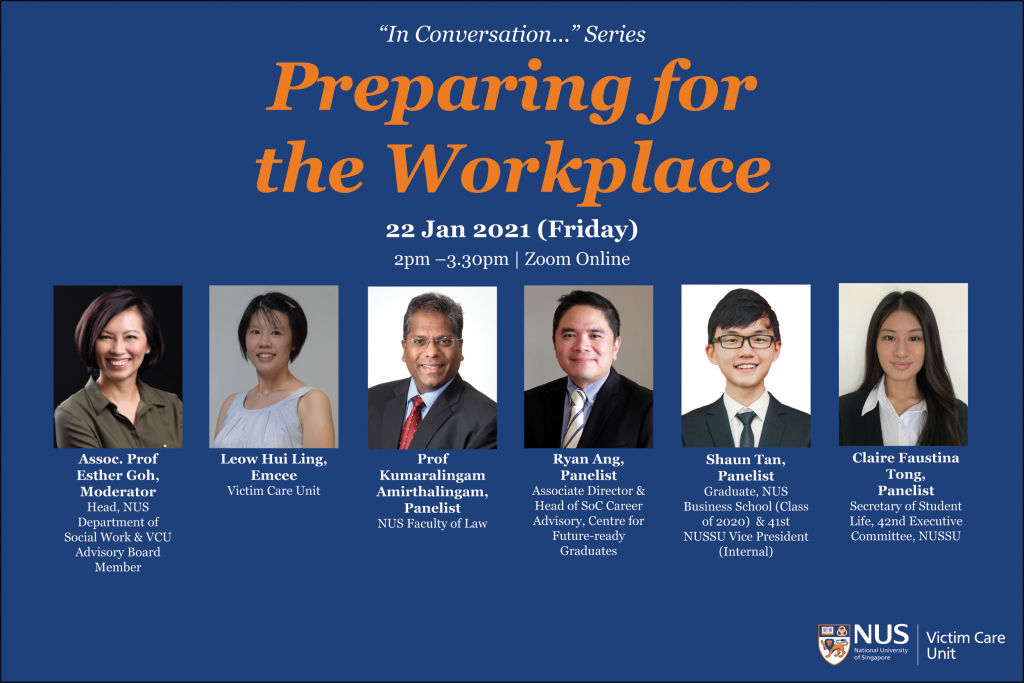
Against this backdrop, the second episode of VCU’s “In Conversation…” Series titled “Preparing for the Workplace” discussed the management of professional boundaries and barriers to reporting workplace sexual harassment, as well as presented recourse options for survivors.

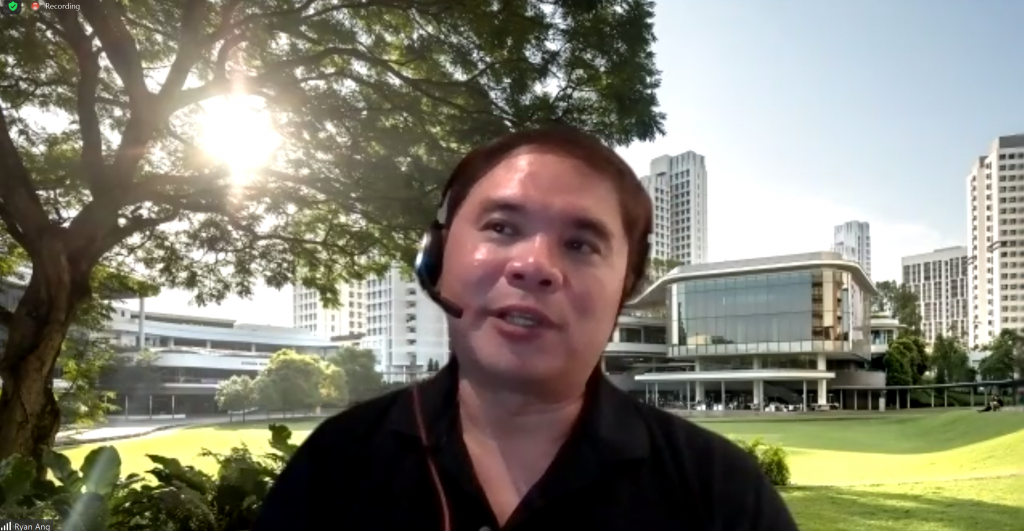
The discussion was hosted by Assoc. Prof. Esther Goh (Head, NUS Department of Social Work & VCU Advisory Board Member)and was joined by Prof. Kumaralingam Amirthalingam (NUS Faculty of Law), Mr. Ryan Ang (Associate Director & Head of SoC Advisory, Centre for Future-Ready Graduates), Mr. Tan Zheng Jie Shaun (Graduate of NUS Business, Class 2020 & Former Internal Vice President, 41st NUSSU) and Ms. Claire Faustina Tong (Secretary of Student Life, 42nd NUSSU).

Panel Discussion

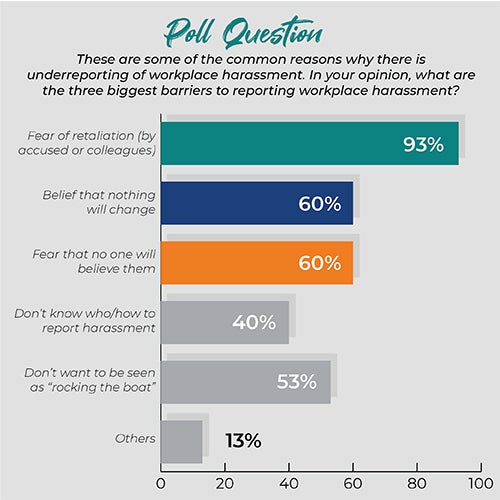
The discussion opened with some poll questions. When asked if they knew anyone who had experienced workplace sexual harassment, the responses revealed that it is more common than one would think – about 1 in 2 attendees said they do know someone. Attendees were then asked about what they thought were the top three barriers to reporting workplace sexual harassment. Most chose fear of reprisal (93%), followed by the belief that nothing would change (60%), and the fear that no one will believe them (60%).

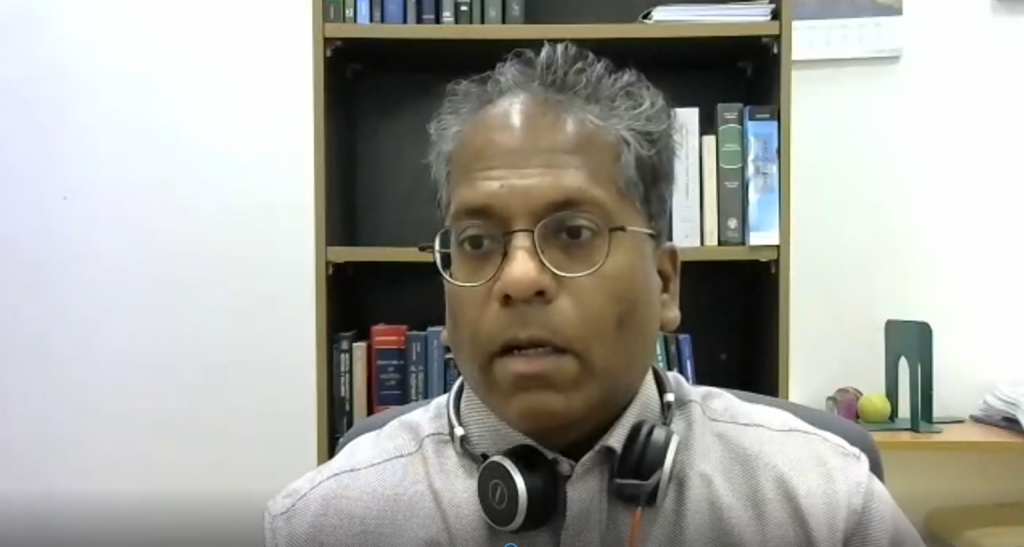
Setting the context, Prof. Kumar from the NUS Faculty of Law described the behaviours that constitute workplace sexual harassment, noting that even ‘less serious’ forms such as inappropriate remarks and jokes – or what some would call “locker-room banter” – should not be tolerated as it is “just as serious in terms of the impact that it can have on people”. He added that addressing workplace sexual harassment cannot just be about empowering victims (e.g., letting them know that they don’t have to put up with it and encouraging them to speak to someone about it) but that others should also learn to recognise that such behaviours are wrong.

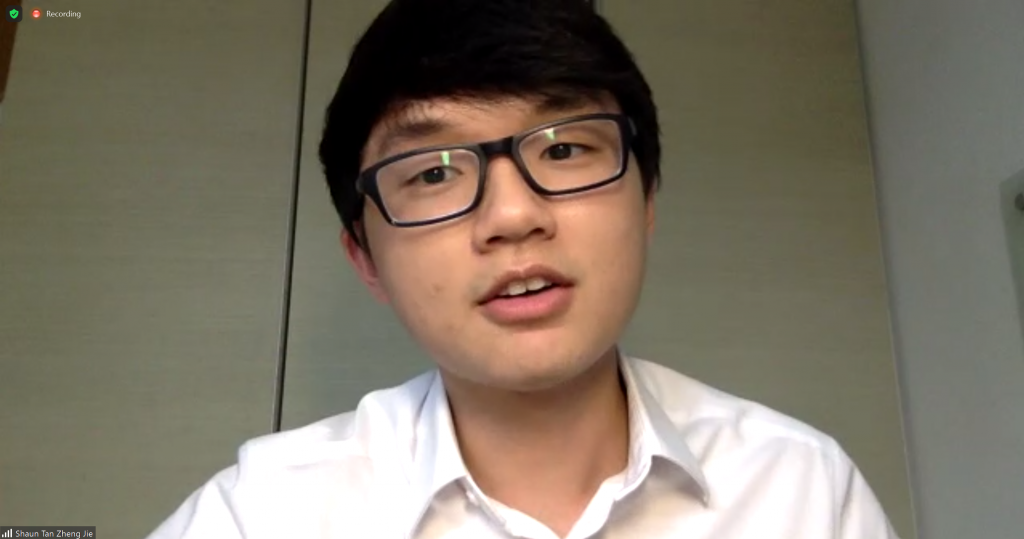
Mr. Shaun Tan spoke next about what one can do if they think they are on the receiving end of such behaviours. Fresh in the workforce, he assured that “the ambiguity and fear” that one feels when they start their first job is not uncommon. What he found useful is the “constant catch-ups and follow-ups with friends on the good and bad… experiences in the workplace, which can help your peers be accountable to you and you to be accountable to your peers”.

When asked about how one should support a peer, Ms. Claire Tong stressed the importance of avoiding any form of victim-blaming. She also cautioned against probing into the details as much as we might be curious as this can make them feel uncomfortable.

Chiming in, Assoc. Prof Esther Goh – Head of the NUS Department of Social Work and VCU Advisory Board Member – spoke about “starting where they are” as well as the importance of believing what they had shared even if we are unsure of its validity; “if this is their experience, it’s true to them”. She also touched on the emotional burden that can come from being the peer’s only confidant and offered the advice of encouraging that peer to either seek professional help or – if they are really averse to that – to confide in at least one more common friend.

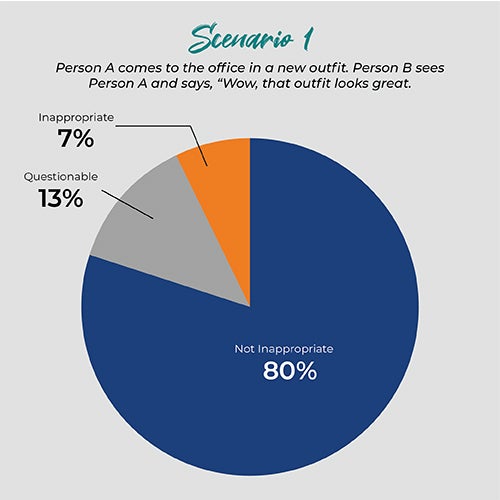
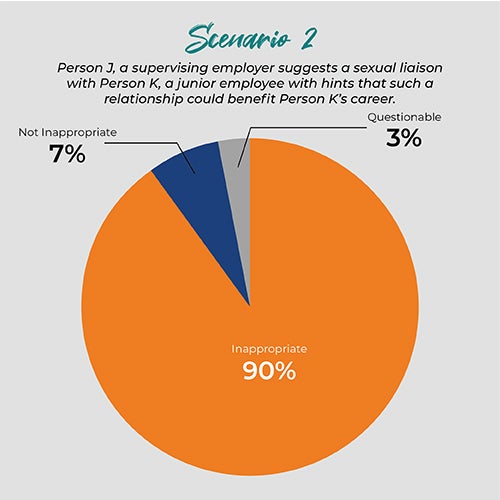
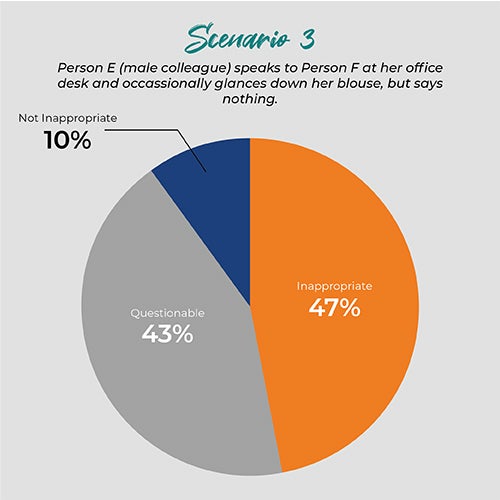
Following a question from the floor on what counts as an “inappropriate compliment,” attendees were invited to rate the appropriateness of some scenarios. Most understood what counts as inappropriate behaviour in the workplace. But when they were asked about ‘grey areas’ – such as in Scenario 3 – attendees were less sure.

When asked about what one should do if a senior from work asks for a drink after work or offers mentorship over lunch, Prof Kumar stressed that one should not feel obliged to take up the offer. He added that one can also try to invite someone else along. If that senior says “Don’t,” then that is a clear red flag. Prof Kumar also spoke about the inappropriateness of a senior colleague expressing interest in a junior.

Revisiting results from the earlier poll, Prof Kumar spoke about how reporting can be encouraged, such as by having an anti-harassment policy (such as in the Code of Conduct for NUS Staff) and actively implementing it, raising awareness of such information as well as about employee obligations and rights so they know what the OB markers are, and complementing these with information for survivors – their rights, what they can do, and their reporting channels.

Observing that 60% of the attendees chose “Belief that nothing will change” as one of the three biggest barriers, Prof Kumar also stressed the need for clear and proper follow-through by the company/organisation, as well as clear communication of outcomes thereafter (though also noting that some communication might need to be more discrete given the sensitivity of such cases). Ending off, he emphasised that survivors should always have the say in the process and that it should not be taken out of their hands, receive timely updates on the process, and receive proper closure.


Reflecting on the poll responses, Mr Ryan Ang – Assoc. Director and Head of SoC Advisory at the Centre for Future-Ready Graduates (CFG) – spoke about how the fear of reprisal is not uncommon, especially when the perpetrator is in a position of authority who has vested interest in the internship. He assured that CFG is a “neutral party” who does not have any vested interest in the grading of their internship or in the evaluation of their work performance. Noting that most of the students who have come forward wish to remain anonymous, Mr. Ang also assured that this will be respected throughout CFG’s investigative process.

While salary and work progression are important aspects to look out for when seeking a job, Mr. Shaun Tan stressed that there should be as much, if not more, curiosity about what the workplace culture and environment is like. Similarly, Ms. Claire Tong suggested that seniors at university can be a useful starting point to know more about the workplace culture of a particular industry, and that one should also find out if the company has an anti-harassment policy and what their rights are.

Adding on, Mr. Ryan Ang assured that CFG does their due diligence before posting an internship opportunity on NUS TalentConnect, such as setting the criteria for internship allowance and ensuring that the companies have valid ACRA (Accounting and Corporate Regulatory Authority) registration numbers and use an official office domain email rather than personal email account. CFG will also reach out to students for feedback on how their internship went.

If you or someone you know is affected by sexual misconduct, please reach out to NCU for support by calling our sexual misconduct helpline (+65 6601 4000) or emailing us at ncu_help@nus.edu.sg.

On-Campus Options

If you experience or observe workplace harassment during a summer vacation internship or an internship that is sourced from NUS TalentConnect, you can contact:

Centre for Future-Ready Graduate (CFG)

If your internship is part of a faculty internship module, you can also approach your module coordinator for advice.

Off-Campus Options

If you experience or observe workplace harassment in a non-NUS sourced internship, you may contact:

Tripartite Alliance for Fair and Profressive Employment Practices (TAFEP)

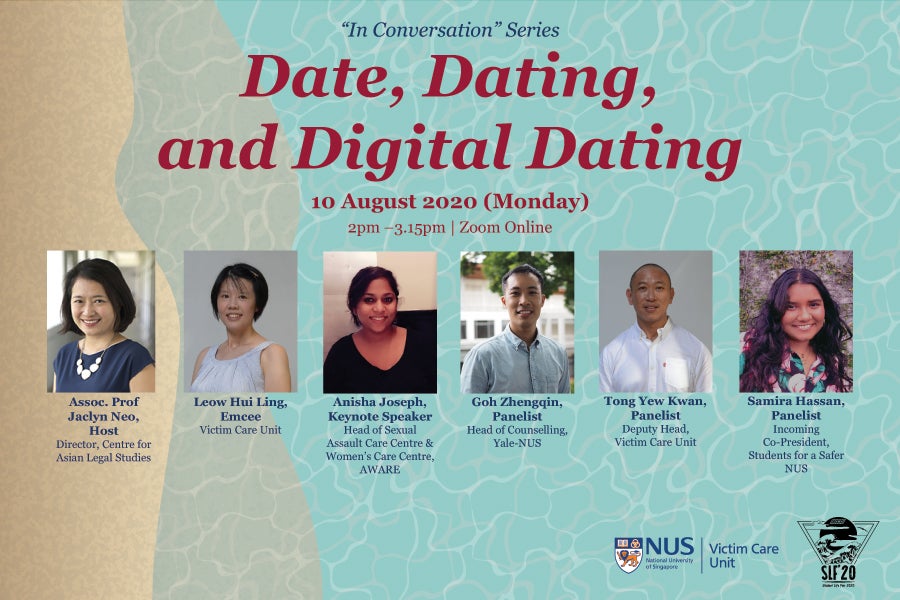
Recap: A Conversation on Date, Dating, and Digital Dating (10 Aug 2020)

6-7 out of 10. This was what most of the attendees of the Victim Care Unit’s (VCU) conversation on Date, Dating, and Digital Dating think is the proportion of undergraduates who are either attached or actively pursuing a relationship. This is consistent with the observations made in a Straits Times article, which cited universities as being “the best place to strike up friendship and partnerships”. Attendees were also polled about what was most important to them when seeking a long-term partner. On the top of this list were: respect, trust and honesty, and open communication.

But being clear of what people wanted in a relationship did not make dating on campus any easier. For instance, how can one start talking about consent with their partner? Would they find the topic boring? What does it mean to “cross the line”?

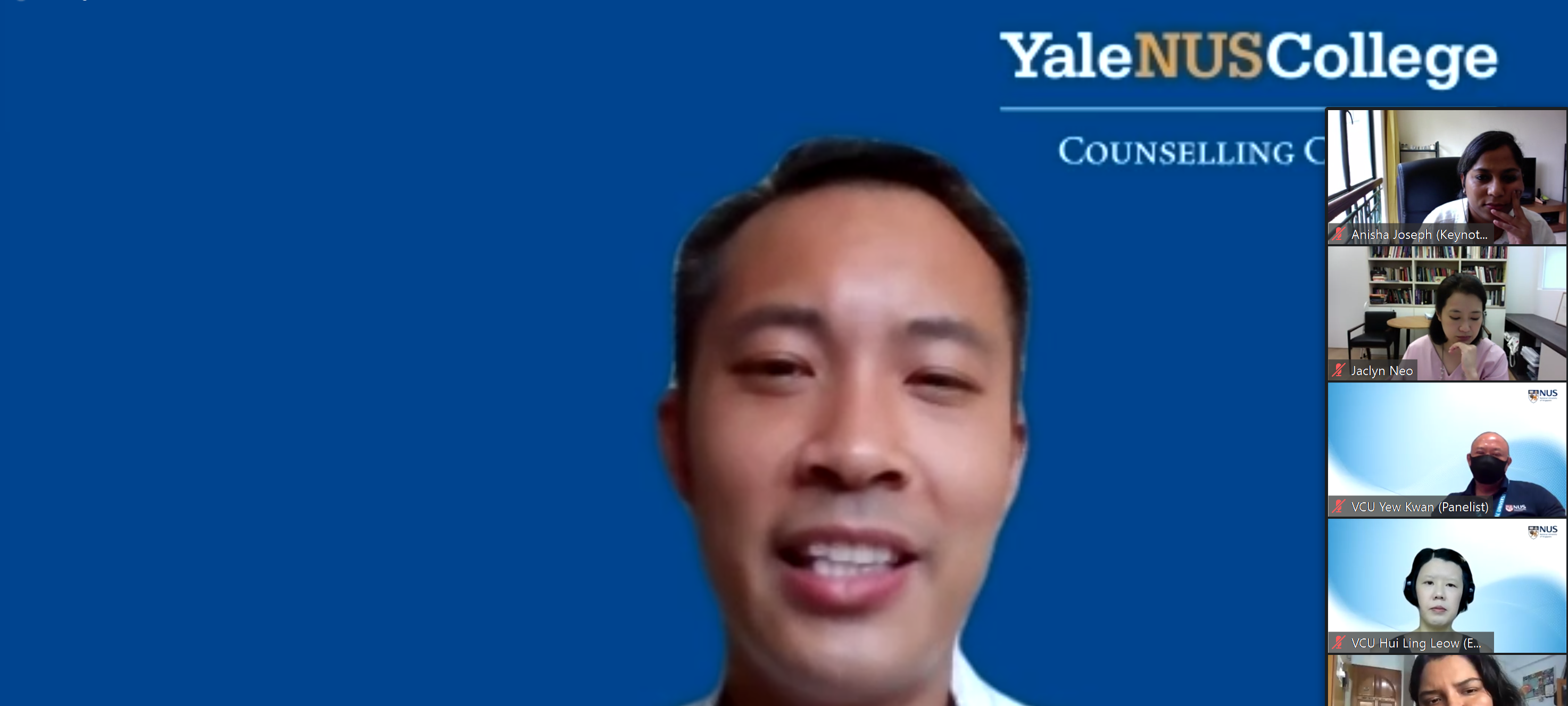
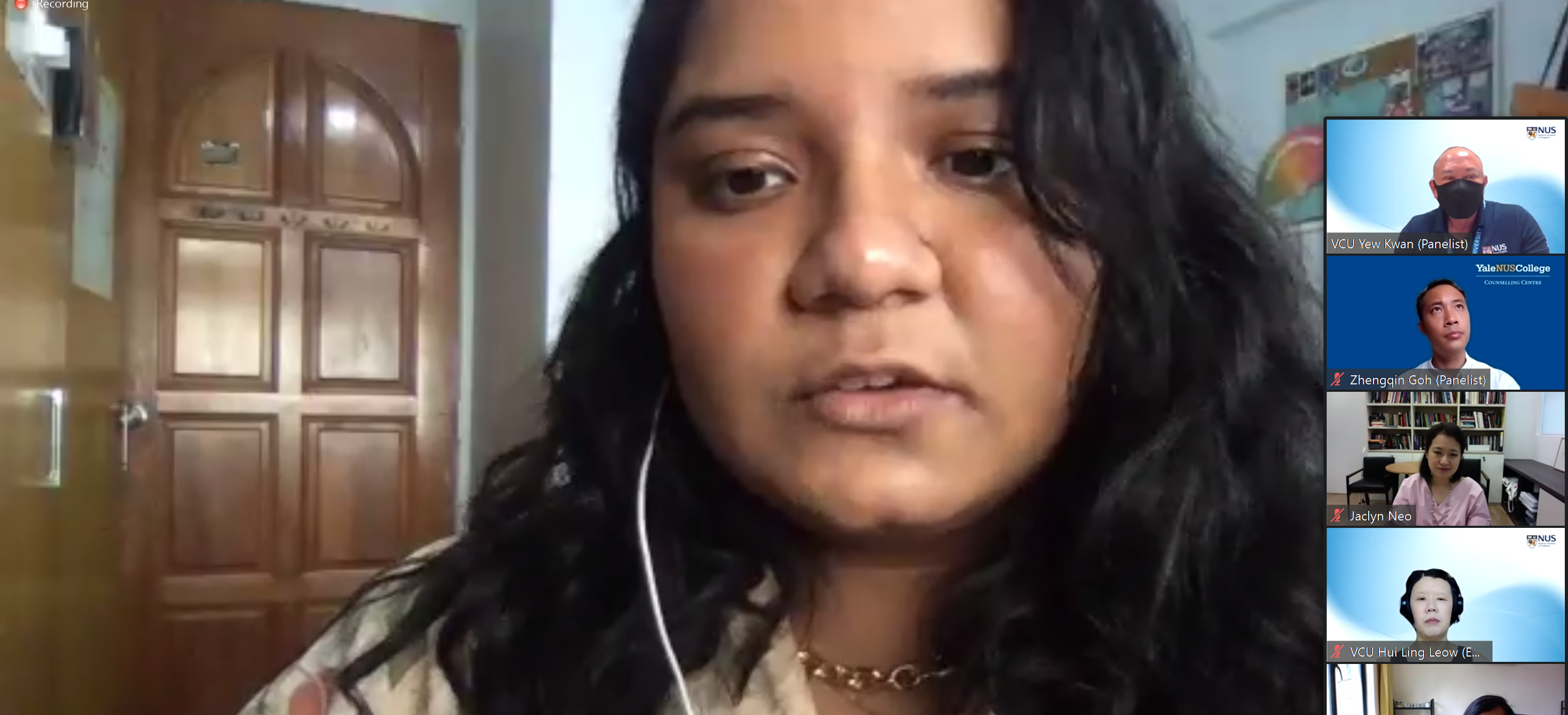
Kick-starting this first episode of VCU’s In-Conversation…” series are host Associate Professor Jaclyn Neo(Director of Centre for Asian Legal Studies), keynote speaker Ms. Anisha Joseph (Head of Sexual Assault Care Centre & Women’s Care Centre, Association of Women for Action and Research (AWARE)), and panelists Mr. Goh Zhengqin (Head of Counselling, Yale-NUS), Dr. Tong Yew Kwan (Deputy Head of VCU) and Ms. Samira Hassan (Incoming Co-President of Students for a Safer NUS).

"We need to talk about boundaries" - Keynote by Ms. Anisha Joseph

If you’re confused about dating on campus, you’re not alone,” assured Ms. Anisha Joseph. She stated that this was not because what constitutes consent today was grey, but that consent was rarely talked about. This followed a finding from a recent survey on the youths’ perception of sexual consent by AWARE and Ngee Ann Polytechnic, where only slightly more than half of the respondents had discussed sexual consent with their partners.

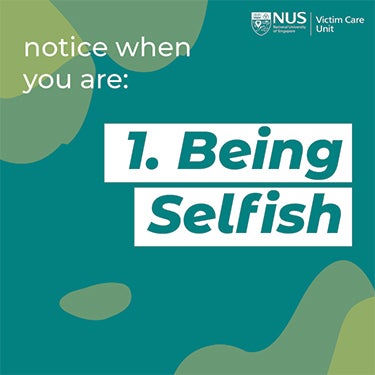
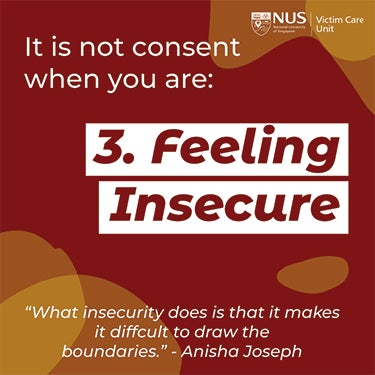
Calling for the need to “Create a Culture of Consent on Campus,” Ms. Joseph gave pointers on how one could know that they have crossed the line. “In order to build a culture of consent, we need to talk about boundaries,” Ms Joseph emphasised. She then shared some examples of what these boundaries looked like.

Panel Discussion

The panel discussion covered a broad range of topics, from what someone could do when they find themselves or someone they know to be in an unhealthy relationship, to how conversations on dating and consent can be encouraged on campus.

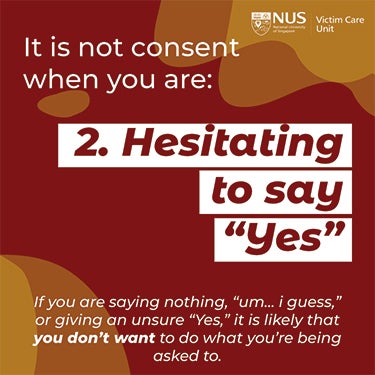
Weighing in on the engagement of casual hookups – or hookup culture – in Singapore, Mr. Goh Zhengqin explained that hookups can make people feel more desirable and validated. Echoing Ms. Joseph, he stressed the importance of consent: “If there is hesitancy on your part, then what you should be saying is, “No.” […] You decide what you want to do with your body.”

Mr. Goh also touched on what some green and red flags in a relationship might be. While green flags include qualities like mutual respect and mutual giving, red flags include the lack or absence of open communication and mutual trust, and the inability to forge deep connections.

When asked about what students can do if they feel victimised, Dr. Tong Yew Kwan assured students that they were not alone and that VCU is here to help. Apart from providing immediate emotional and practical support, he also shared that VCU Care Officers would explore options and develop safety plans in tandem with the affected student.

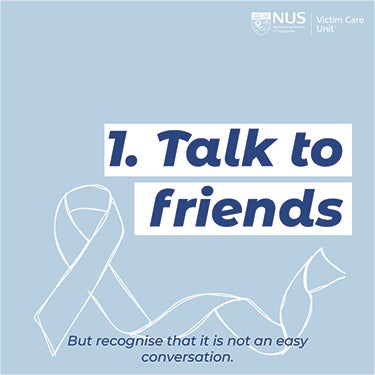
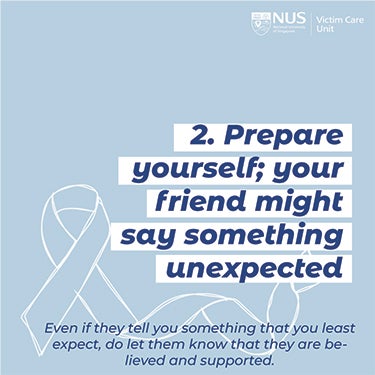
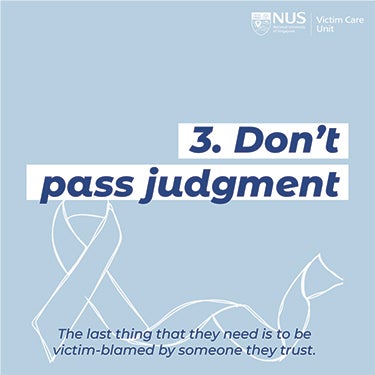
Dr. Tong also shared some tips on how one could help other victims and survivors of sexual misconduct:

Responding to Assoc. Prof Jaclyn Neo’s question on what advice he would give to someone who is being harassed by their ex-partner be it online or offline, Dr. Tong highlighted that the Protection from Harassment Act (POHA) is one form of protection measure that aims to curtail continuous unwanted behaviour and/or communication from harassers.

He shared that something similar also exists on campus in the form of a “No-Contact Order” (NCO). That said, he recognised that such interventions could be difficult remedies for some survivors, stressing in particular the under-reporting of cases among male students as it runs counter with stereotypical masculine norms.

Drawing from her experience and observations as an undergraduate student in NUS, Ms Samira Hassan weighed in on NUS’s Respect and Consent (R&C) module as well as the broader campus climate. “We need a syllabus, not just one module,” she stressed. She added that more needs to be done to reach out to others who have either not learned about such topics or are averse to them.

Questions from the Floor

Attendees asked about how one should approach the topic of sex and consent with a potential partner, especially if one is from a different culture. “Embrace the awkwardness,” said Ms. Joseph, adding on that there is “nothing wrong with being awkward.”
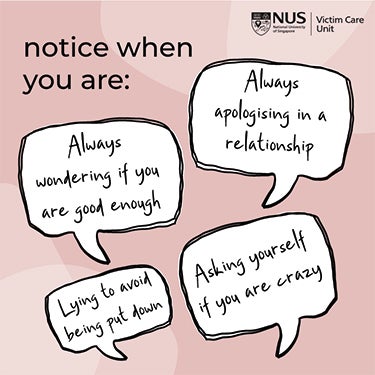
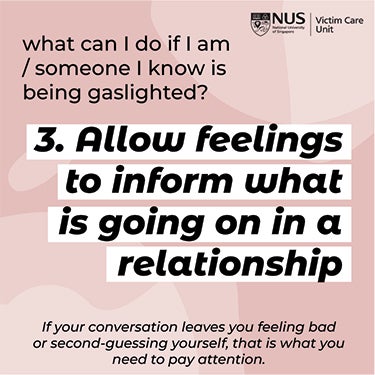
She assured attendees that despite the initial awkwardness, such conversations will become more increasingly normal and natural. In the same vein, Mr. Goh shared that one should just seek consent at every step of the way.

Concurring with these two speakers, Dr. Tong shared that being comfortable with articulating boundaries can help those romantically involved to develop mutual understanding of what consent and being in a relationship means.

To wrap up the session, the speakers addressed one last question: What if asking for consent is considered non-spontaneous or if a potential partner finds it too boring?

Mr Goh shared that it doesn’t have to be boring and that it can actually be fun to have that conversation. He also stressed that the conversation about consent does not stop in dating relationships and that consent should be sought in marriage as well.

Chiming in, Ms Joseph reminded attendees that at the end of the day, “It is not about making it fun but making it normal. We need to normalise such conversations.”

If you or someone you know is affected by sexual misconduct, please reach out to NCU for support by calling our sexual misconduct helpline (+65 6601 4000) or emailing us at ncu_help@nus.edu.sg