Understanding consent in relationships as a matter of “yes” or “no” simplifies its complexities. In practice, there are many more factors which influence how an individual communicates consent.
A survey conducted by AWARE in collaboration with Ngee Ann Polytechnic found that while many youths profess a general understanding of consent, fewer felt confident in applying that knowledge in complex or ambiguous situations. For example, participants expressed uncertainty in scenarios involving coercion, withdrawal mid-act, or pressure from partners.
Is implied consent valid? What if a party regrets it afterwards? How about the shame and guilt that comes with rejecting a loved one? Conversations about consent are shaped by power dynamics, cultural-social norms, and our need for intimacy. As such, misunderstandings around consent pose a risk that harms both parties, particularly when consent is assumed and given unenthusiastically rather than actively sought and affirmed.
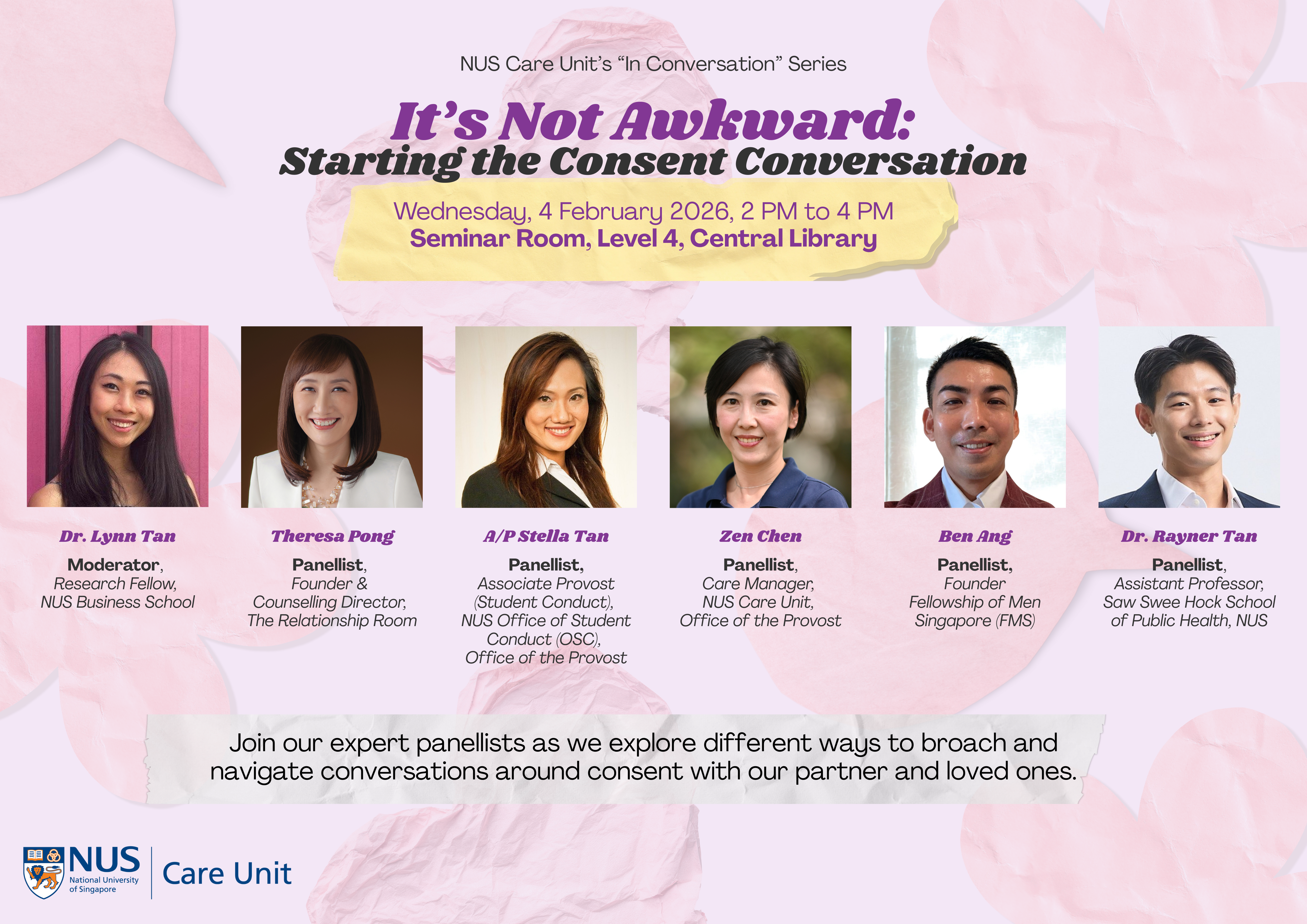
Join our panel of expert discussants as we explore different ways to broach and navigate conversations around consent with our partner and loved ones.