It's Not Awkward: Starting the Consent Conversation
24 Mar 2026 | Events – “In Conversation…” Series
By: Sonali Biswas
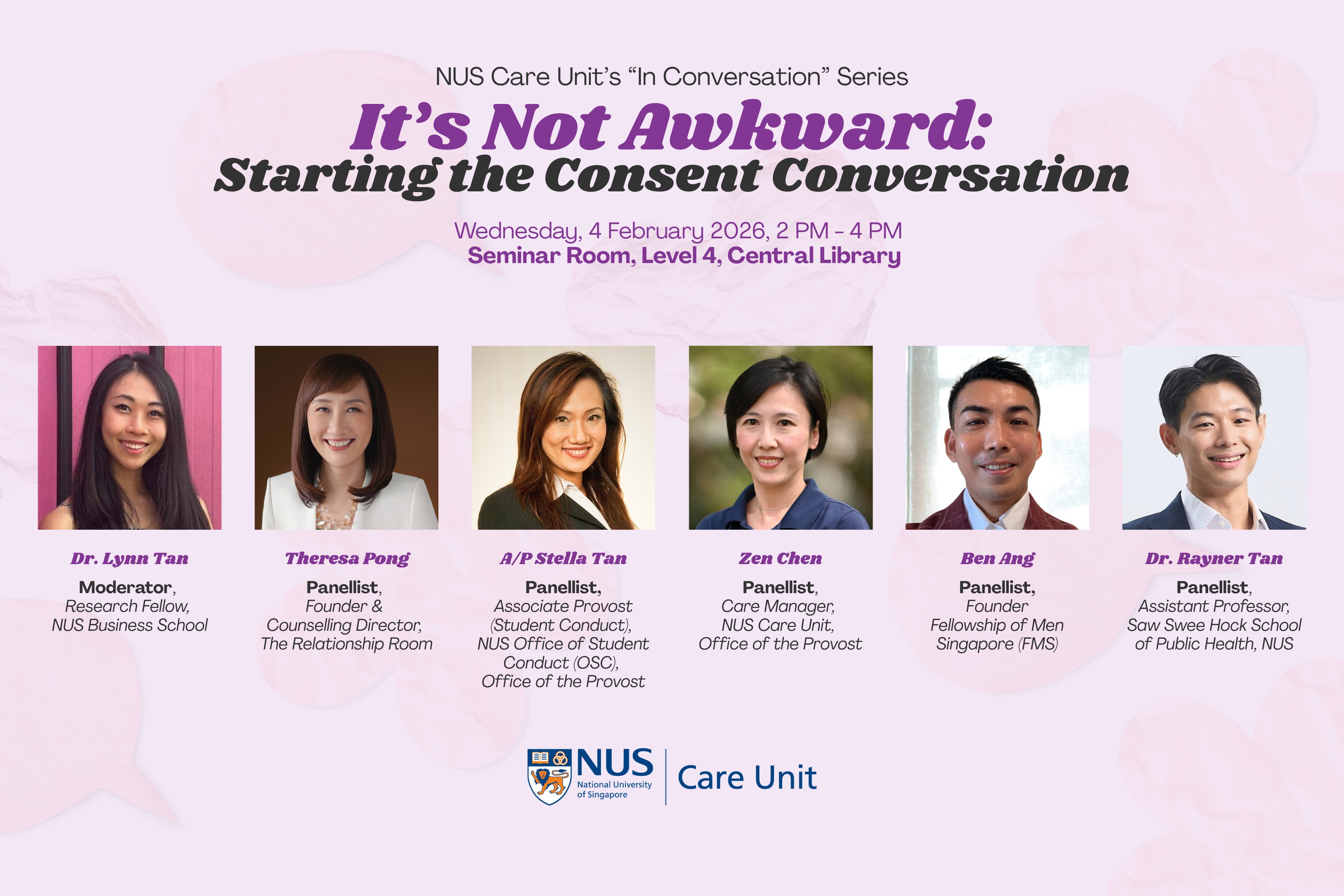
In the sixth episode of NCU’s “In Conversation…” series on 4 April 2026, we invited panelists both from various organizations and disciplines to discuss the different ways we can approach and navigate conversations on consent with our peers and loved ones.
The session was moderated by Dr. Lynn Tan (Research Fellow, NUS Business School), and invited panelists included Ms. Theresa Pong (Founder & Counselling Director at The Relationship Room), Prof Stella Tan (Associate Provost of Student Conduct at NUS Office of Student Conduct), Ms Zen Chen (Care Manager at NUS Care Unit), Mr. Ben Ang (Founder of Fellowship of Men Singapore), and Dr. Rayner Tan (Assistant Professor at Saw Swee Hock School of Public Health, NUS).

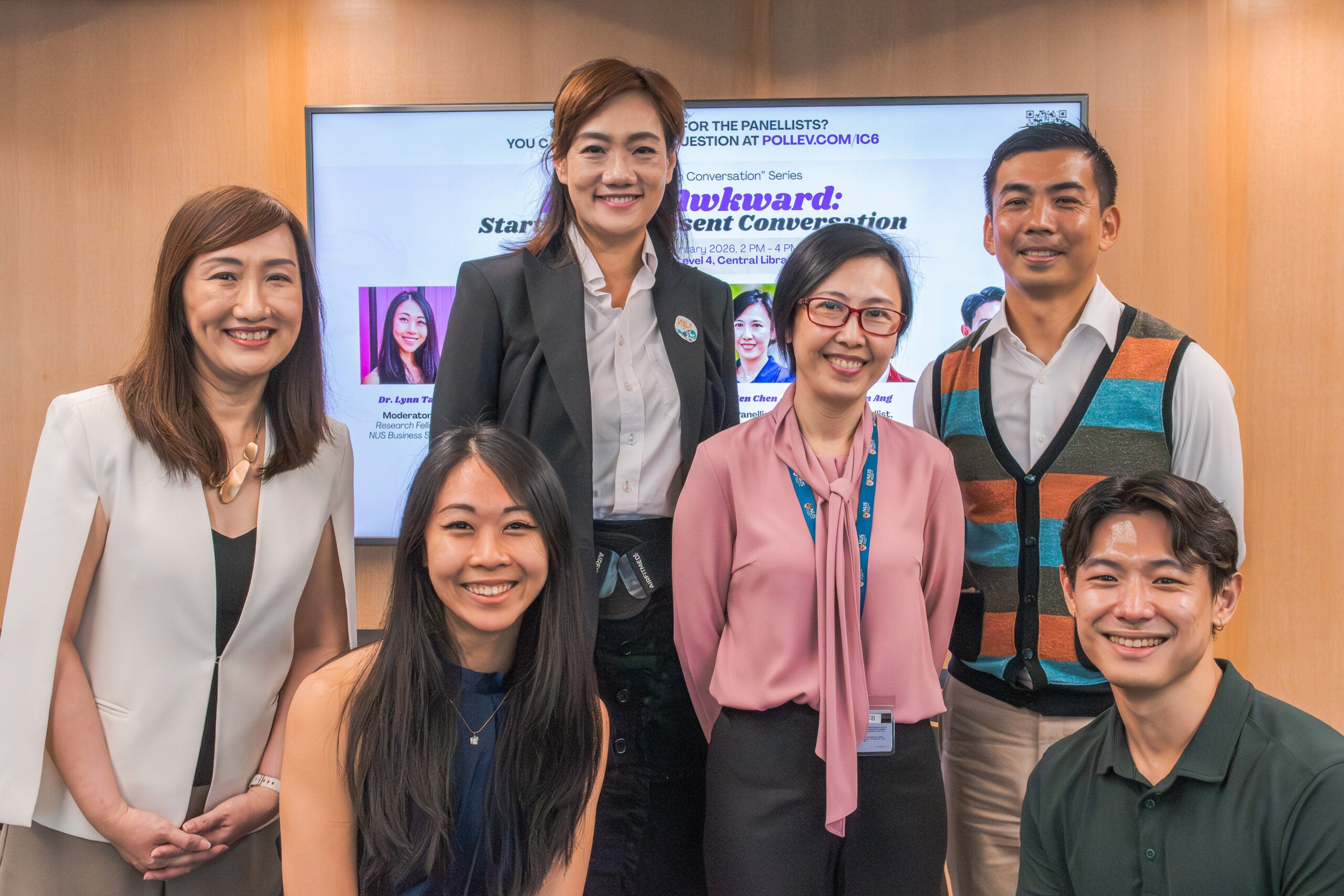
From left to right: Ms. Theresa Pong, Dr. Lynn Tan, Prof Stella Tan, Ms. Zen Chen, Mr. Ben Ang, & Dr. Rayner Tan.
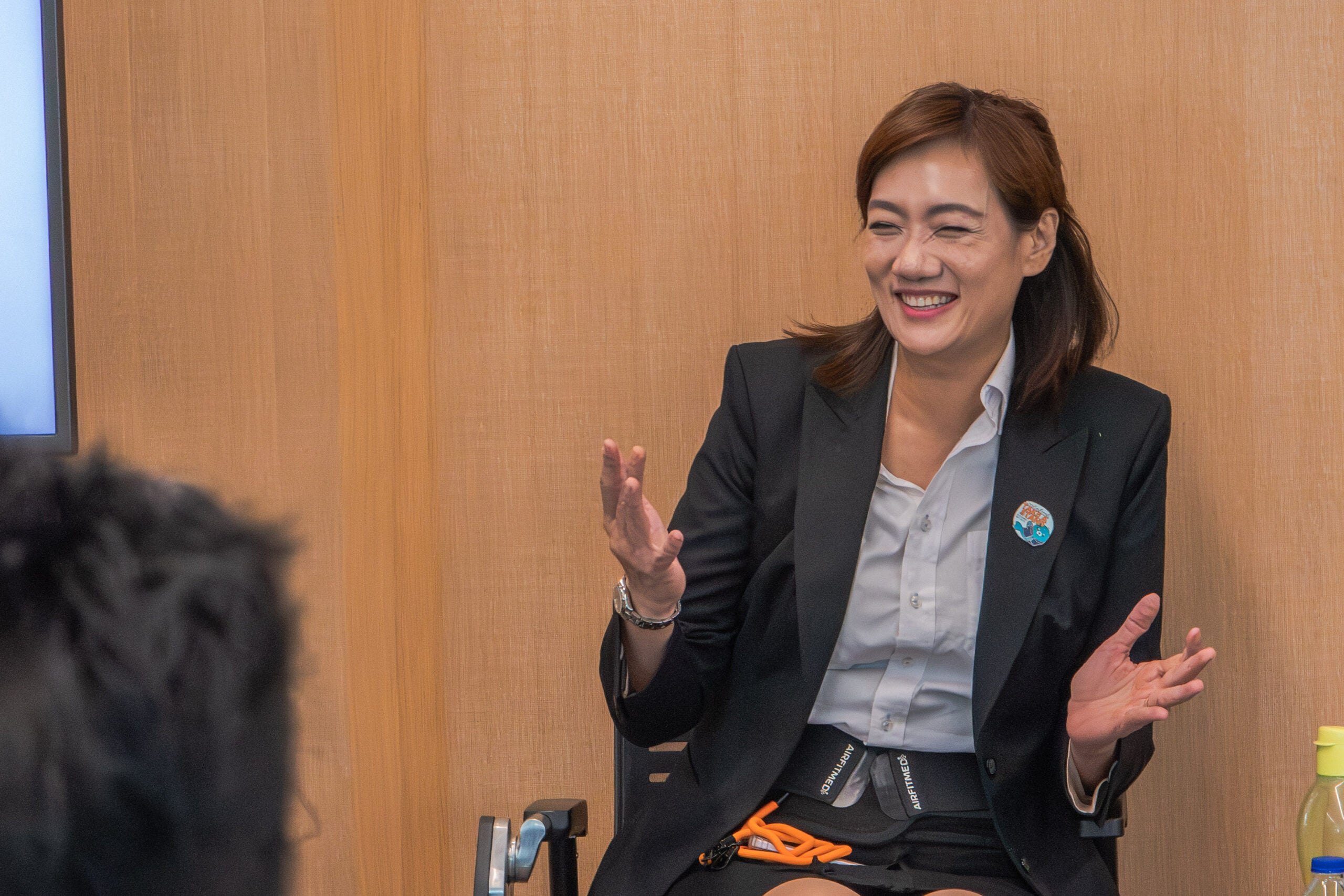
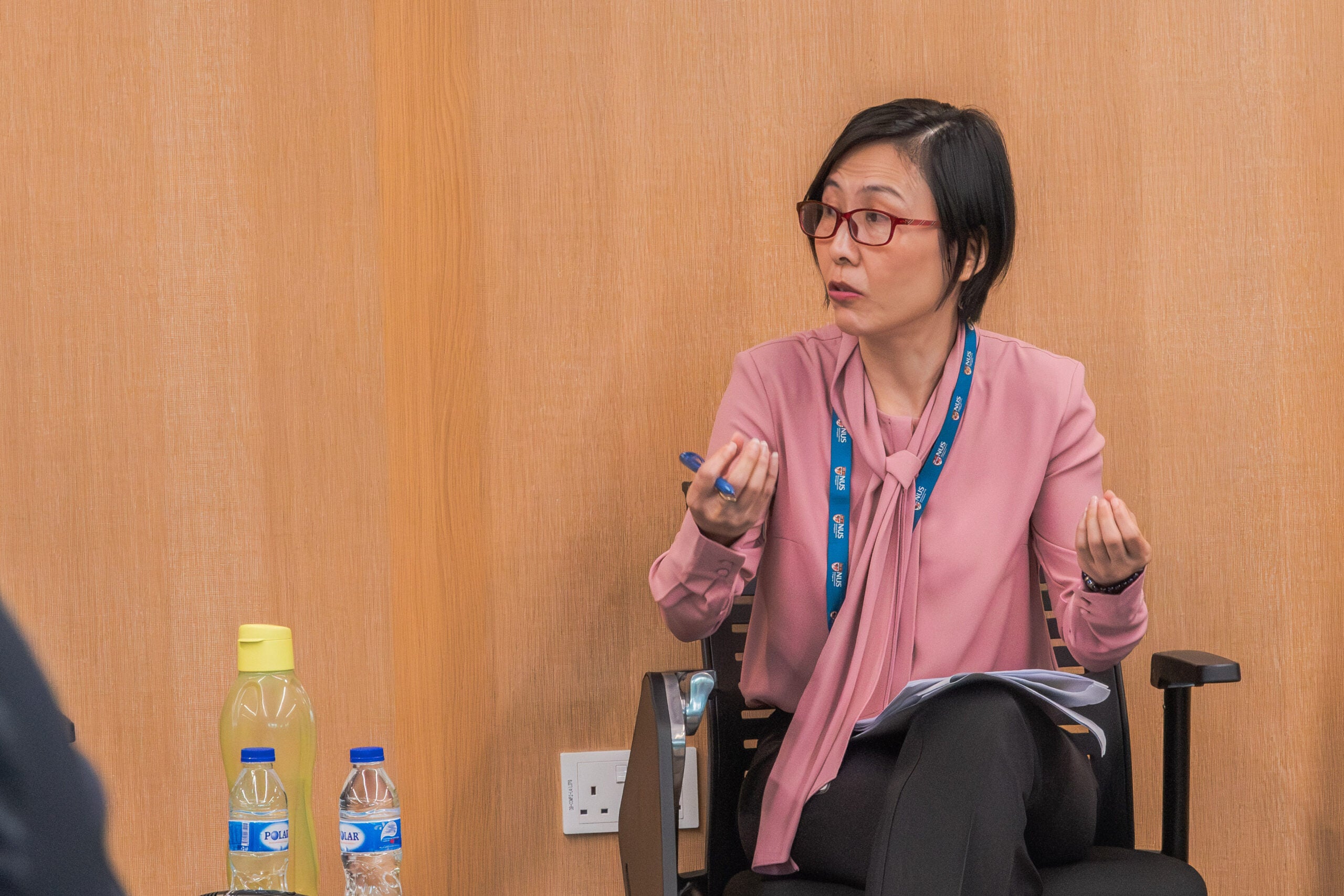
The session began with a conversation unpacking the definition of consent. Ms. Theresa Pong set the tone by emphasising that consent goes beyond a simple ‘yes’ – it requires emotional safety and mutual willingness. Prof Stella Tan added that consent differs across contexts, where cultural norms, the nature of a relationship, situational factors such as intoxication, and even the body language and communication of each party can affect how consent is given and interpreted. Mr. Ben Ang stressed the importance of men taking shared responsibility in the consent conversation, while Ms. Zen Chen and Dr. Rayner Tan each drew attention media representations of consent and relationship power dynamics respectively as lenses through which to understand consent.
“It Is important to move beyond the concept of no means no, and this is done so that we can actually feel safe and connected.”
Ms. Theresa Pong
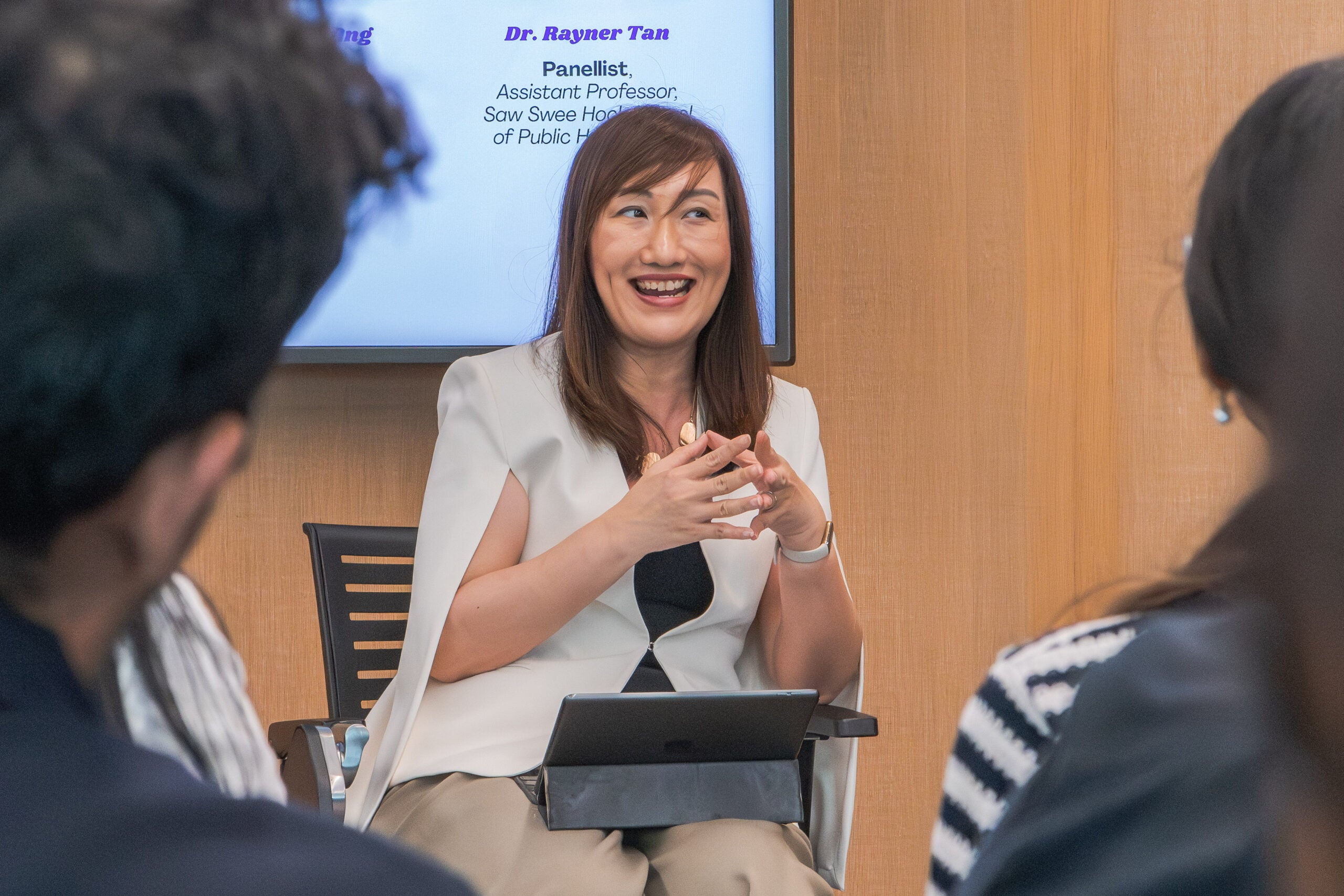
Dr. Lynn Tan then engaged the panelists in a discussion on how to navigate consent in practice. Ms. Theresa Pong spoke about the necessity of building emotional safety in relationships to be able have these conversations openly. On a similar note, Mr. Ben Ang discussed the role of men checking in with their partners to foster continued trust. Prof Stella Tan then raised a thought-provoking example to highlight that consent is sometimes implied within relationships, a reality which can make it hard to navigate the conversation. Dr. Rayner Tan built on this by advocating for normalising explicit conversations around consent, to better ensure all parties provide informed and willing consent.
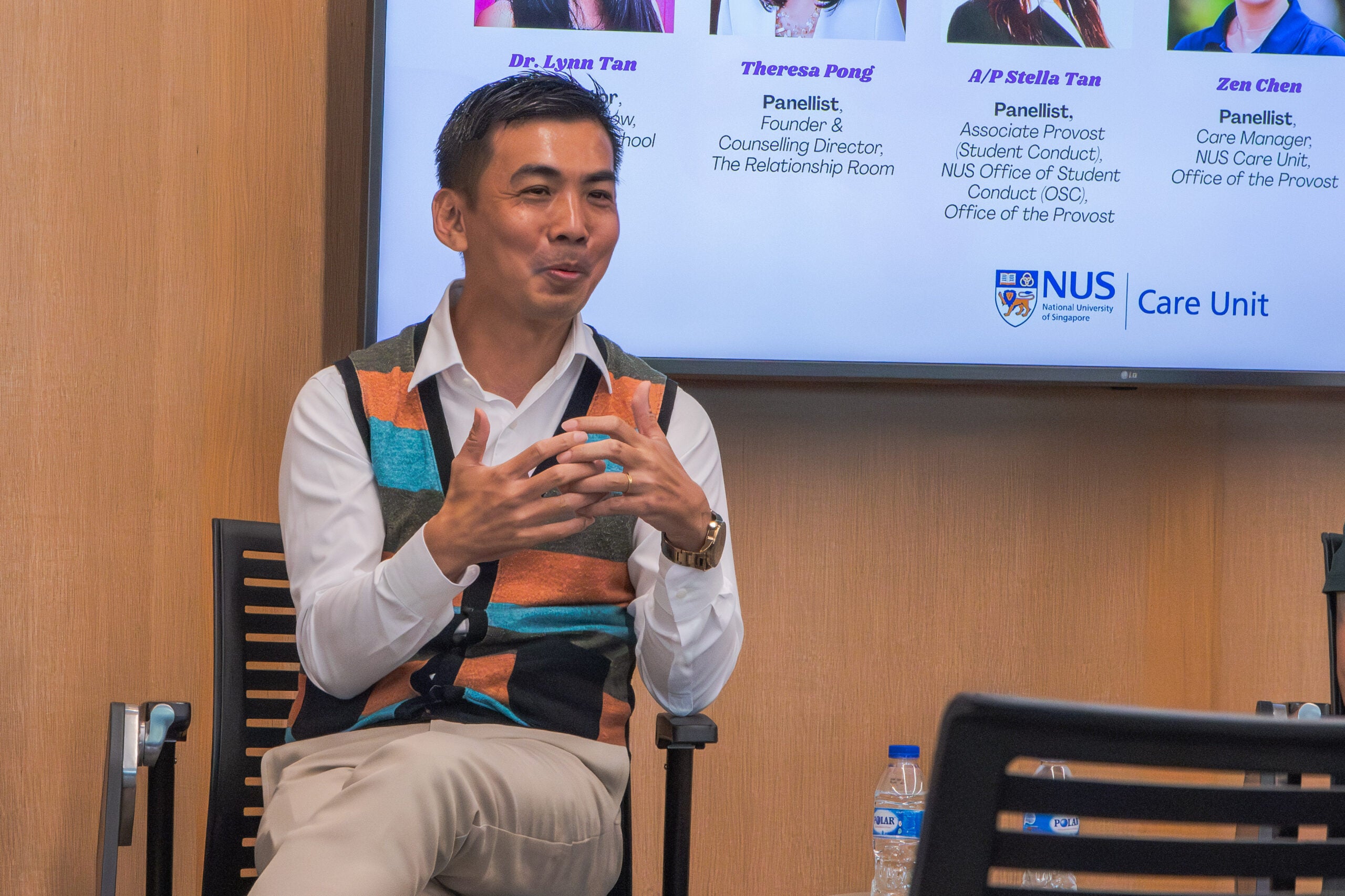
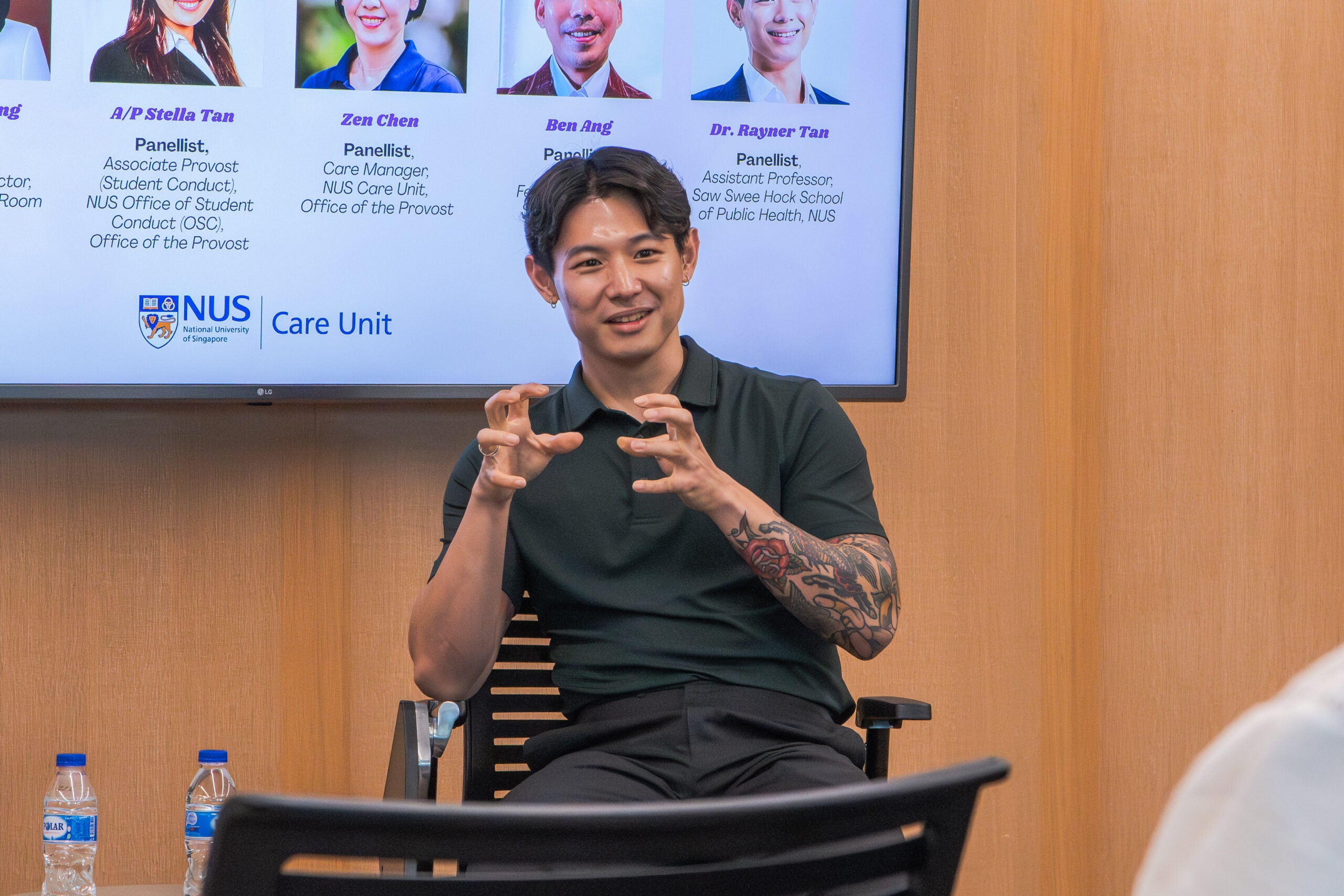
When asked about when and how to bring up the consent conversation. Mr. Ben Ang drew on insights from his experience working with offenders, suggesting to reframe views of consent: rather than seeing it as something that would “kill the mood”, he encouraged viewing it as a foundation for trust. Dr. Rayner Tan further highlighted that the in the context of intoxication or drug use, consent can become more complicated, making it even more important to have these conversations ahead of time.
“I mean, a lot of inmates that I work with keep saying stuff like, Why talk about consent? Consent will kill the mood…. I have seen and convinced [myself] enough that if you don’t talk about that, you will start to damage trust and [the] relationship.”
Mr. Ben Ang
Prof Stella Tan mentioned the importance of friends showing up for friends and community members following experiences of sexual misconduct, leading to a discussion on how best to support survivors and those who experience misconduct. Dr. Rayner Tan emphasized the importance of holding space and practising, while Ms. Zen Chen shared her approach as a Care Manager, to provide a listening ear for survivors without passing judgement or probing for details. Mr. Ben Ang extended this approach to interactions with those who admit to causing harm in relationships. Prof Stella Tan summarised it well, advising the audience to first and foremost provide support when confronted with a situation like this.
“If someone comes up to you to ask you a question [about a negative sexual encounter], rather then saying “let’s call the police, let’s call campus security”, I think the first port of call could be that the person needs help, the person wants to talk about it.”
A/P Stella Tan
Following on from these suggestions, Dr. Lynn Tan asked the panelists for their advice on rebuilding consent in relationships where it has been violated, or in cases where a partner reacts negatively to the topic of consent. Ms. Pong recommended seeking professional help for both parties to reach the point of embracing each other’s vulnerabilities. Dr. Rayner Tan and Mr. Ben Ang both advocated for the importance of self-reflection and drawing firm personal boundaries, accepting that we cannot control others’ reactions. Ms. Zen Chen further highlighted the value of teaching the youth about how to build healthy relationships from the outset.
“It is important to teach our young people how to build healthy relationships, how to recognize health relationships… and to recognize the right people that you want to be around you.”
Ms. Zen Chen
During the Q&A, audience members touched on topics such as navigating intimacy in non-traditional relationship forms present in the modern dating landscapes, and how to navigate consent in a culture where consent is a “taboo” topic. Panelists returned to and reinforced a few key themes: setting boundaries, proactively bringing up the conversation early, and empowering individuals to have the courage to say “no” when feeling uncomfortable. Dr. Rayner Tan further reminded attendees not to let societal expectations define intimacy, and to instead construct your own ‘script’ for intimacy with you partner.
“When you think about… ‘I need to do this, and rush into the next stage, otherwise it’s not really a relationship.’ The question then is, who told you that? You know there’s a relationship between both of you, so you should be able to construct that script for yourself.” – Dr. Rayner Tan
The session closed with panelists providing reflections on what NUS and the wider Singaporean community can do better. They highlighted three key takeaways: to educate (and learn from) the younger generation to take accountability, to look out for and support others in the community when cases of misconduct occur, and to create a safe space to continue this conversation.
If you or someone you know is affected by sexual misconduct, please reach out to NCU for support by calling our sexual misconduct helpline (+65 6601 4000) or emailing us at ncu_help@nus.edu.sg.